
Bridging the gap between industrial metal fabrication and workshop prototyping has always required a compromise—usually meaning two separate, expensive machines eating up valuable floor space. The Gweike MCORE M1 tackles this directly by packing a genuine dual-source setup into a single chassis: a 400W fiber laser dedicated to slicing through sheet metal, paired with an 80W CO2 laser for organics like timber and cast acrylic. Combined with an oil- and moisture-filtered air compressor setup that eliminates the immediate need for costly bottled gases, the Gweike MCORE M1 brings true sheet metal cutting down to small-shop scale.
In this comprehensive review, we put both laser sources through their paces, benchmarking maximum cut thicknesses, edge quality, and real-world performance across plywood, acrylic, carbon steel, stainless steel, and aluminum.
Table of Contents
*The links on this website can be affiliate links. I earn a small commission at no extra cost to you. When you buy through these links you will support this website, which helps me to run this website(which cost money and a TON of time) and provide all these extensive reviews and information to you for free, without any paid membership.
Gweike MCORE M1 Overview & Industrial Hardware Design
Although the Gweike MCORE M1 (check the end of the article for 500$/500€ OFF discount code) is the most compact entry in the Gweike metal-cutting lineup, its chassis and sub-assemblies are built strictly to industrial standards.
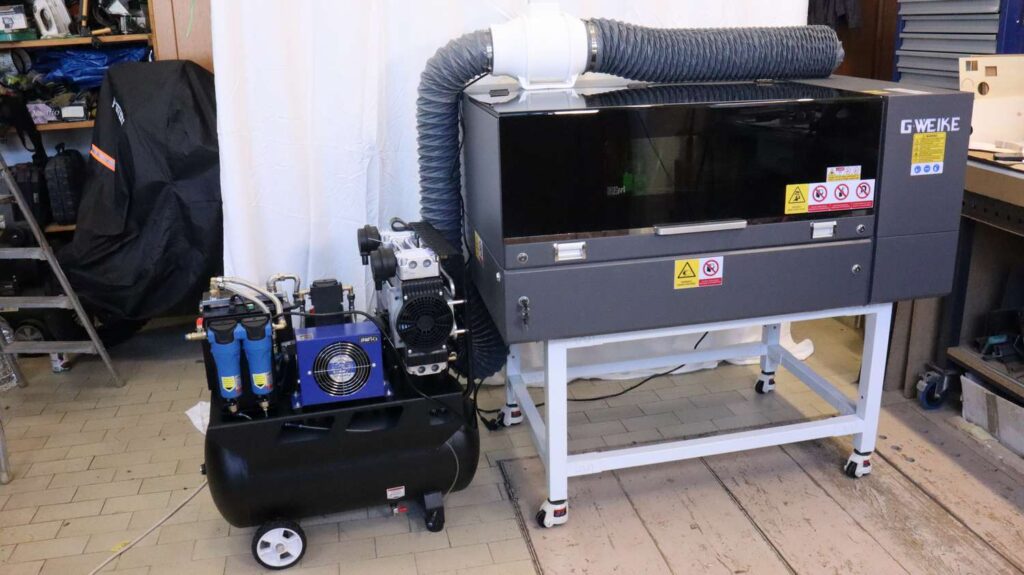
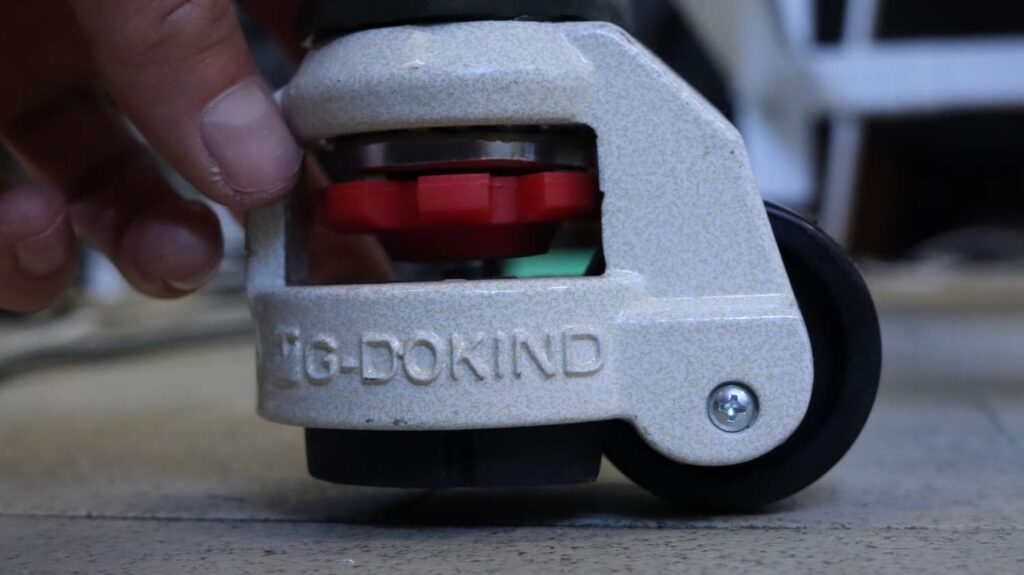
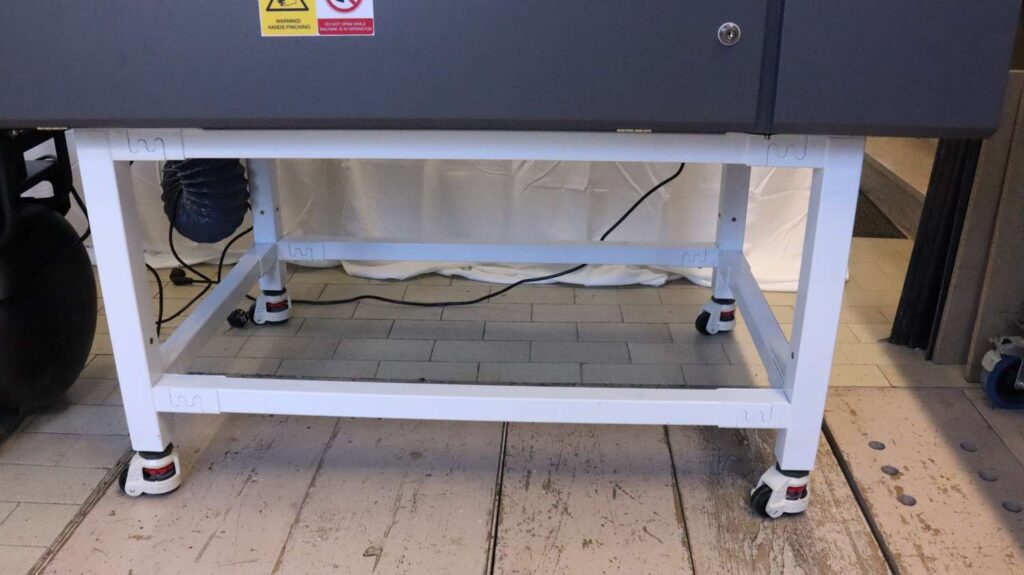
The Gweike MCORE M1 machine pairs with a heavy-duty, dedicated work table featuring industrial casters. Rotating the red integrated rings lowers solid rubber leveling feet to the floor, isolating vibration and keeping the bed rigid during high-acceleration toolpaths.
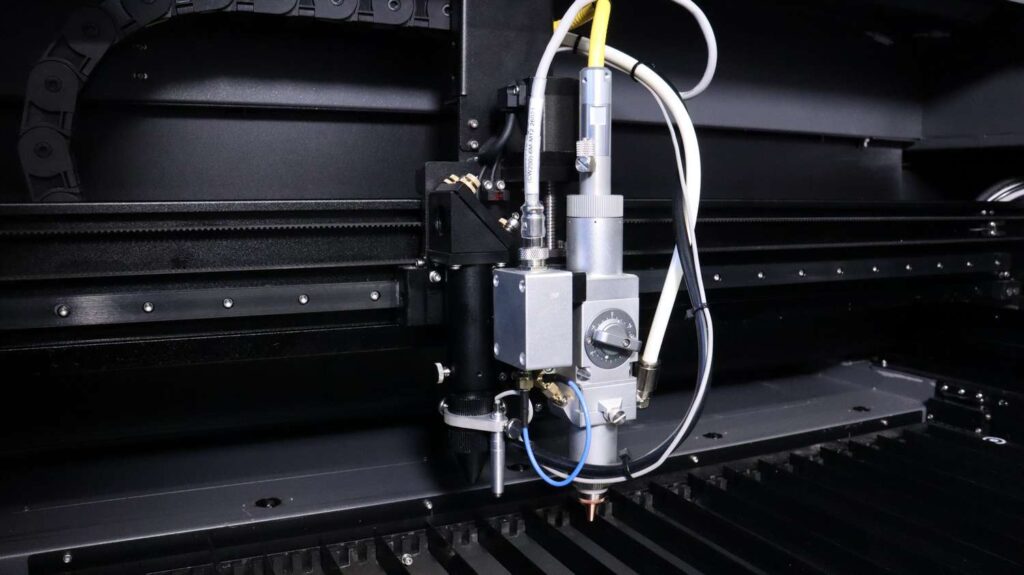
The metal-cutting fiber laser head receives its 1064nm beam via an armored optical fiber entering the top assembly. Focal position is calibrated directly on the head using an analog dial knob, allowing operators to match the internal focus height to specific material thicknesses according to the material preset.
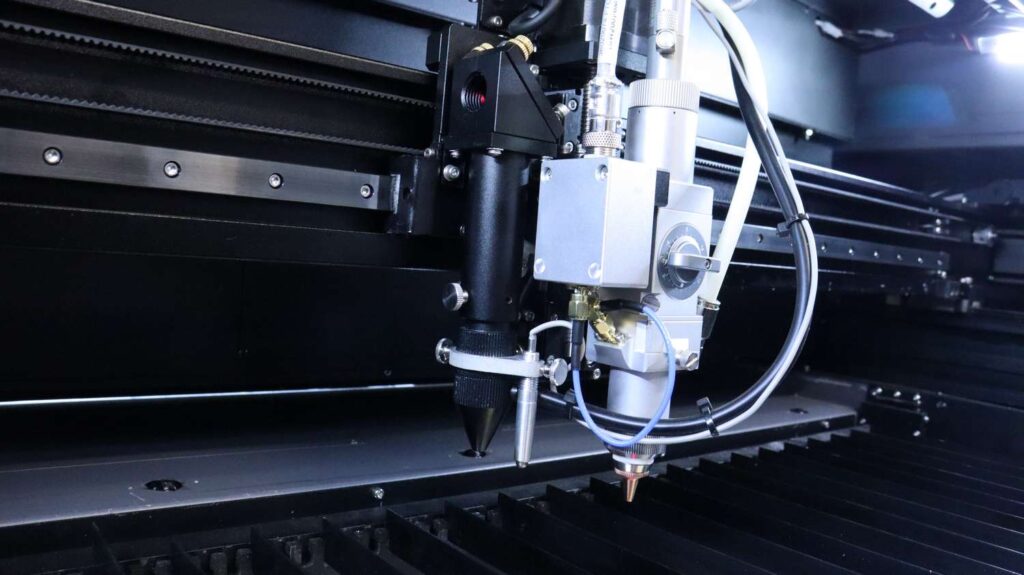
Directly adjacent to the fiber optics is a high-precision capacitive height-sensing module that tracks metal surfaces in real time, maintaining consistent focal offset across bowed or uneven sheet stock.
Mounted to the left of the fiber head is the CO2 assembly, consisting of a traditional flying mirror path and cutting nozzle fed by an internal 80W glass tube. A mechanical limit switch mounted next to the nozzle automates Z-height focusing for non-metallic substrates like timber, leather, and cast acrylic.
Internally, the Gweike MCORE M1 utilizes off-the-shelf industrial linear rails, drivers, and standard components, simplifying long-term maintenance and field replacement.
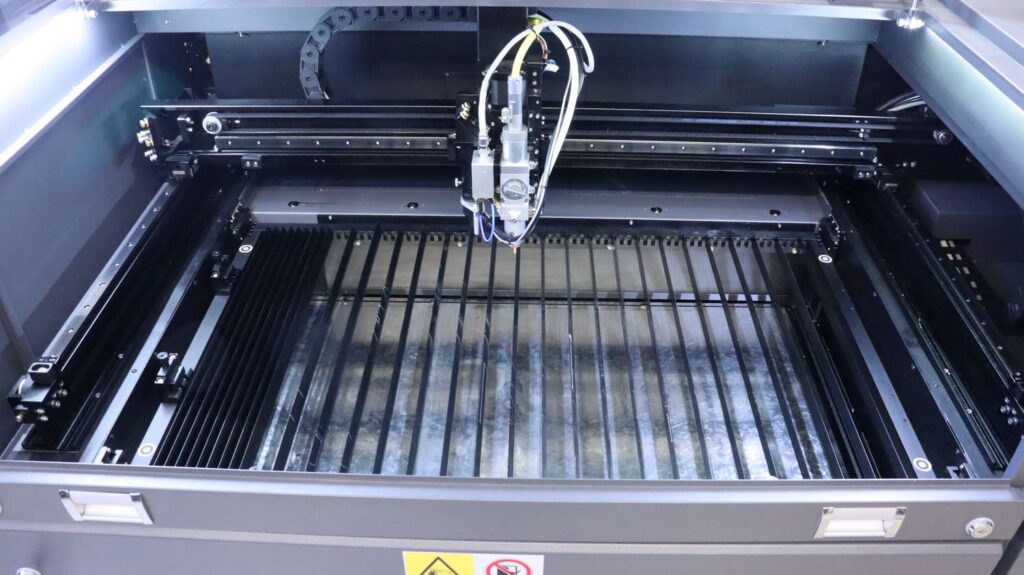
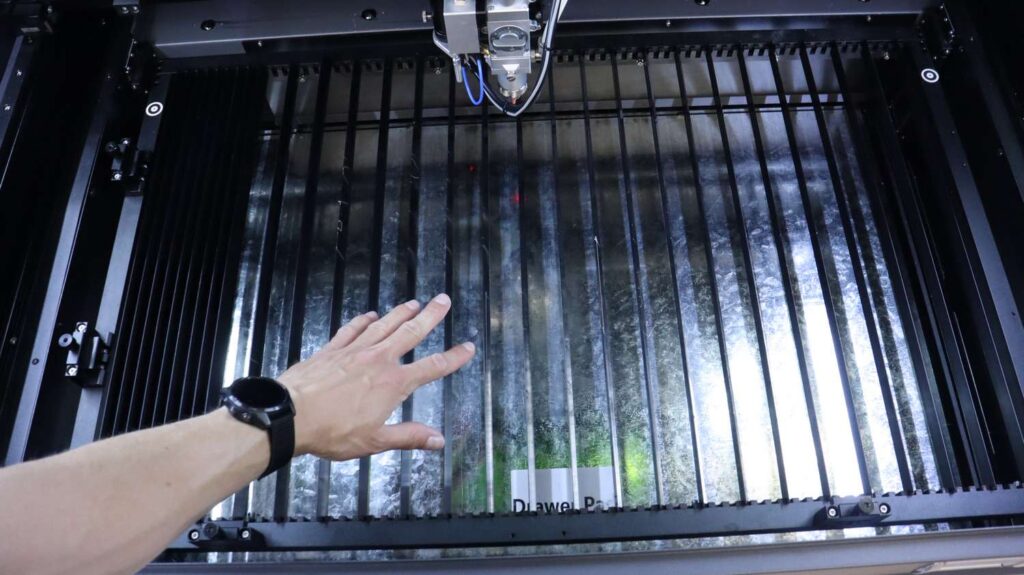
The cutting bed features removable steel slats spaced roughly 10 mm apart to minimize backside flash. Keyed locks secure access panels around the enclosure, and both side panels can be opened to pass through oversized sheet goods assisted by integrated feed rollers along the rear frame.
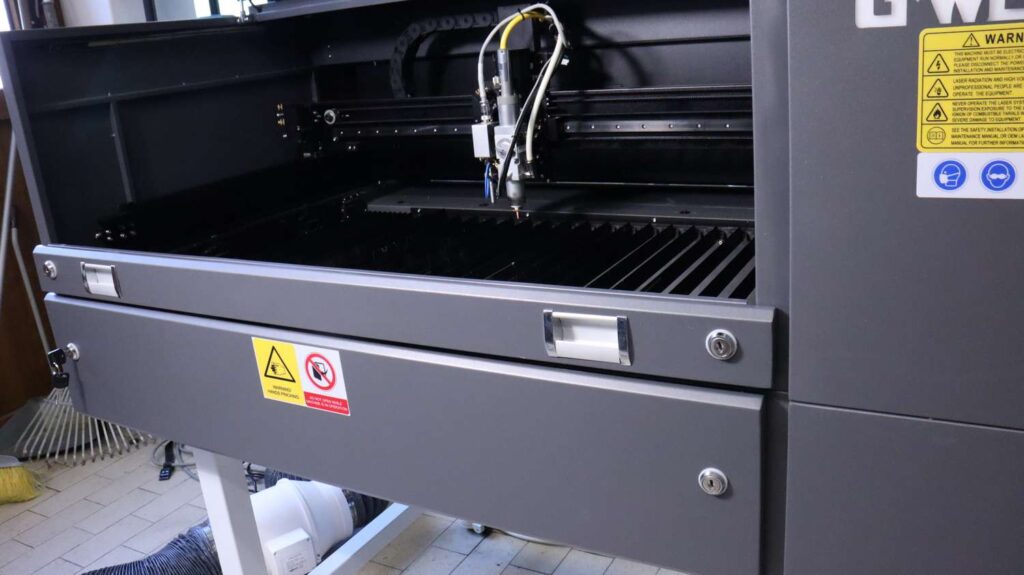
Control and data lines are routed through a dedicated interface panel using standard Ethernet for real-time machine communication, alongside a secondary USB interface dedicated to the internal overhead positioning camera. Ethernet is great since it allows for much longer communication line than USB which is limited to only 2m.
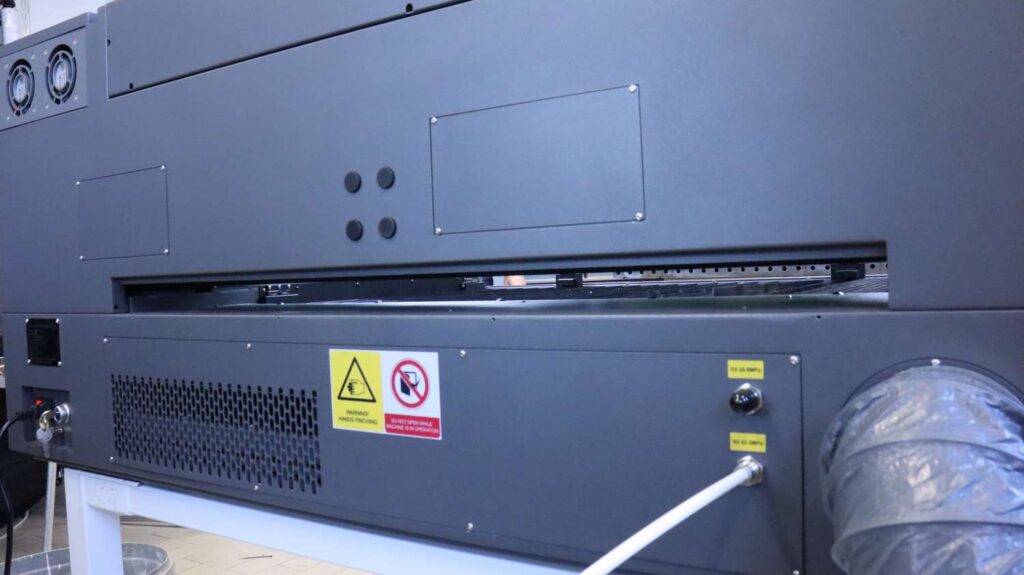
Around the back, pneumatic inputs allow quick-connect routing for low-pressure oxygen, high-pressure nitrogen, or shop air, situated next to an exhaust port powered by an external inline extraction blower. On the photo below, the material pass through slot is open.
Gas Assist Systems: Technical Gases vs. Compressed Air
Traditional fiber laser metal cutting relies heavily on high-pressure assist gases: nitrogen is typically used to shield stainless steel and aluminum from oxidation, while oxygen is utilized for carbon steel to generate an exothermic cutting reaction. Consuming bottled technical gas on small production runs can quickly become cost-prohibitive.
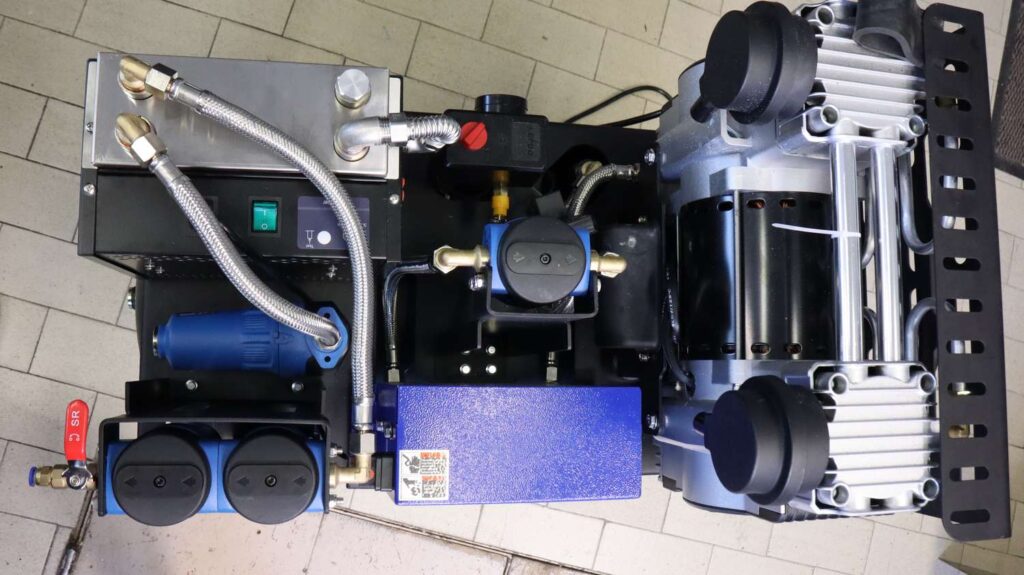
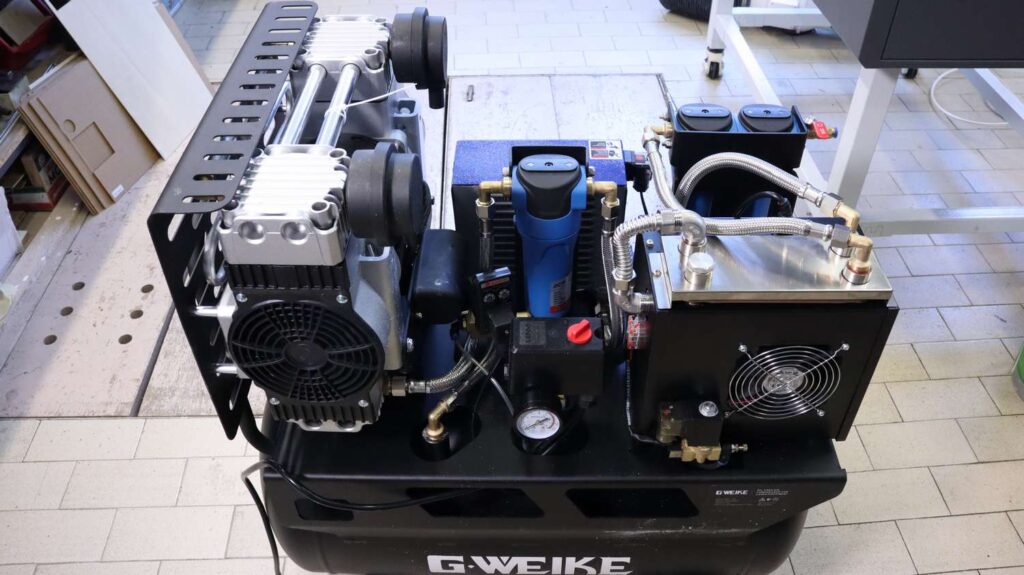
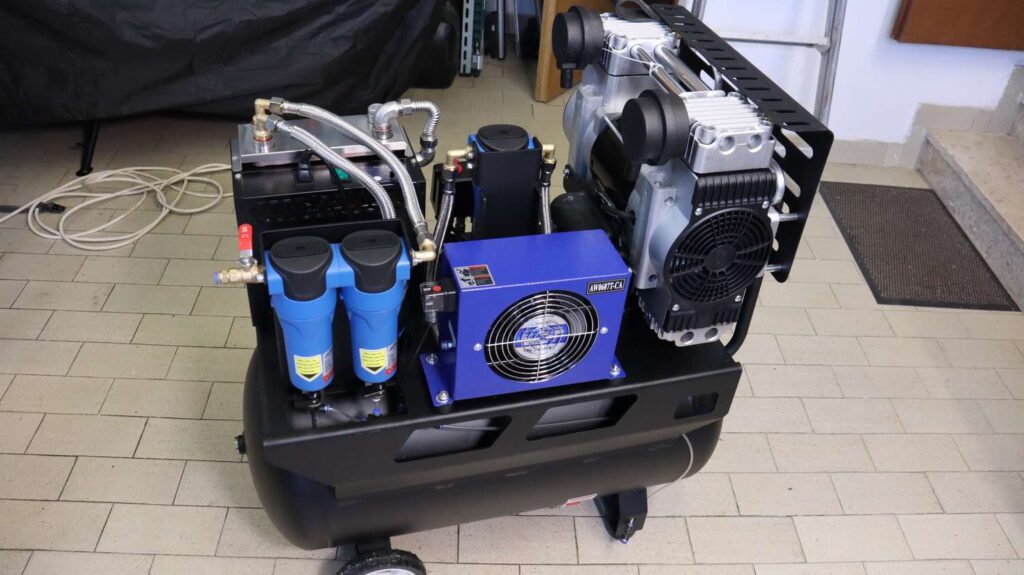
To solve this, Gweike offers a dedicated 70-liter silent compressor package. Because moisture and aerosolized oils degrade cutting performance and damage optical lenses, the compressor integrates a multi-stage filtration system to supply clean, dry, pressurized shop air directly to the cutting head as a budget-friendly gas alternative.
CO2 Laser Performance: Wood & Acrylic Benchmarks
Switching over to CO2 mode requires loosening two thumb screws, extending the CO2 nozzle below the retracted fiber head, and adjusting the motorized Z-bed height. Material positioning is framed via an integrated red diode indicator aligned through the mirror system.
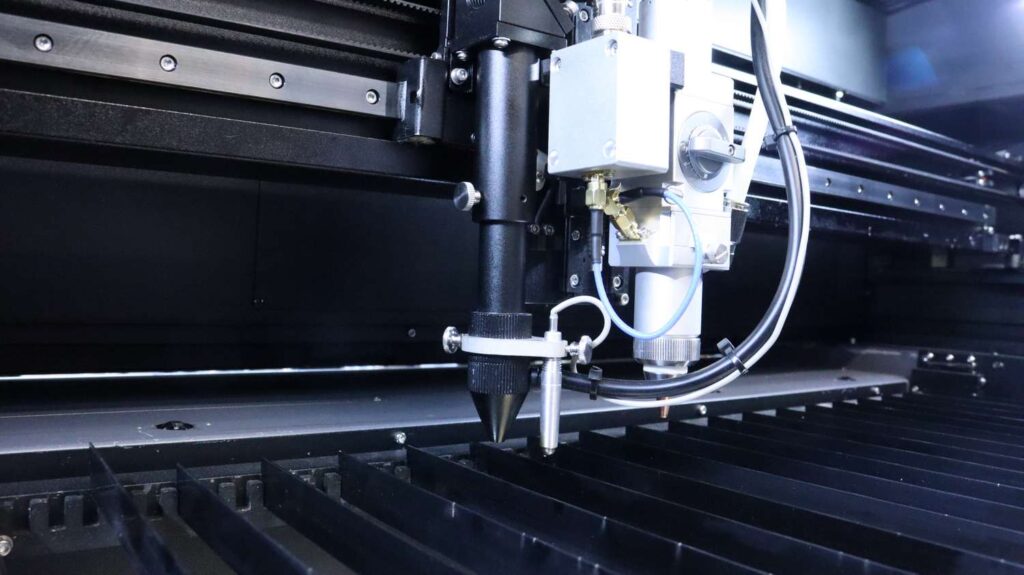
Operating under Gweike’s native control software using default material presets, the 80W CO2 tube was tested across varying non-metal densities:
3mm Plywood: Clean cut edge with rapid processing speeds and sharp contrast during raster engraving passes.
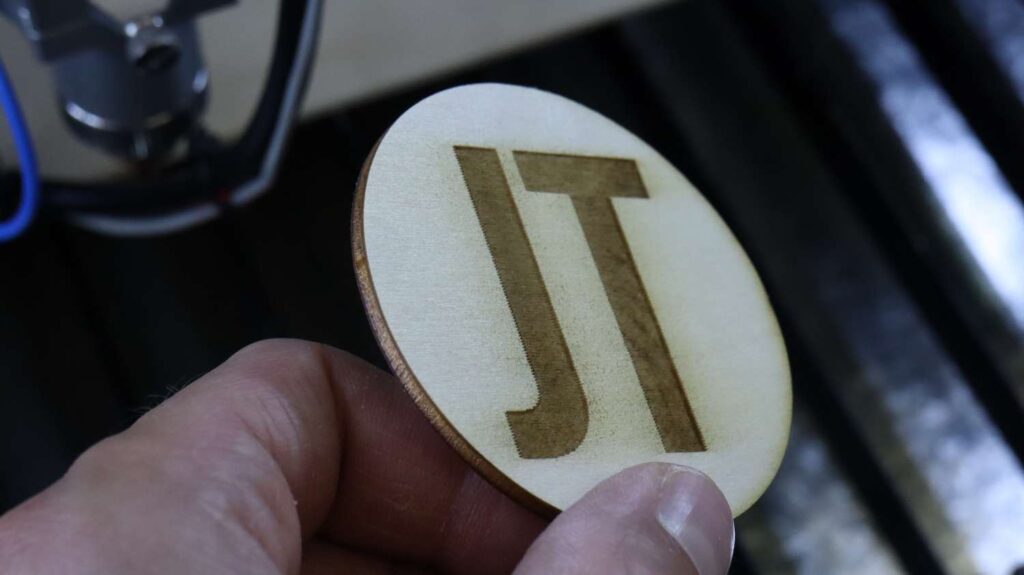
6mm Poplar Plywood: Single-pass cut with clean edges and zero blowout.
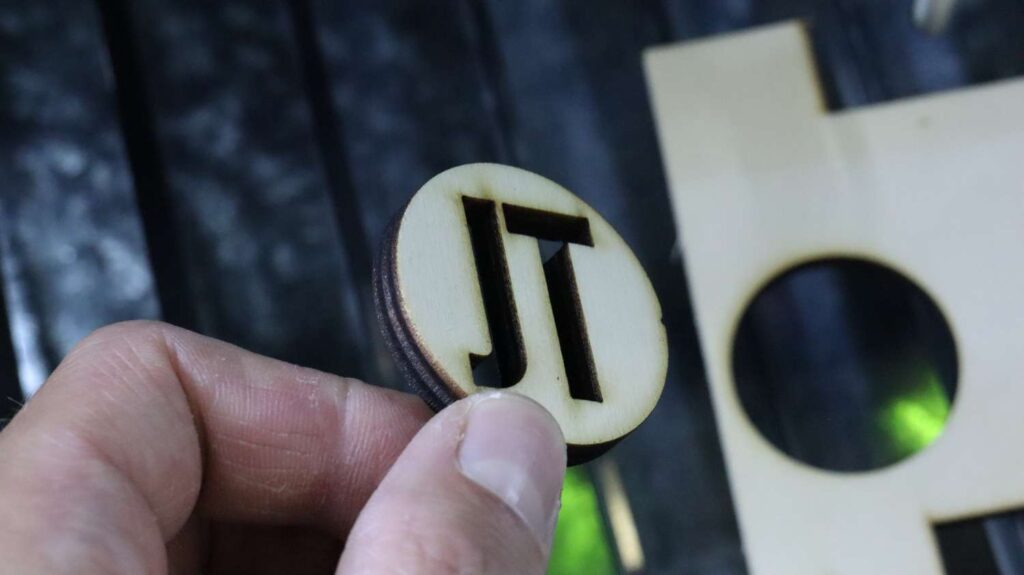
10mm Poplar Plywood: Cut through at a reliable feed rate; minor surface charring observed, which could be mitigated further with higher-volume air assist delivery.
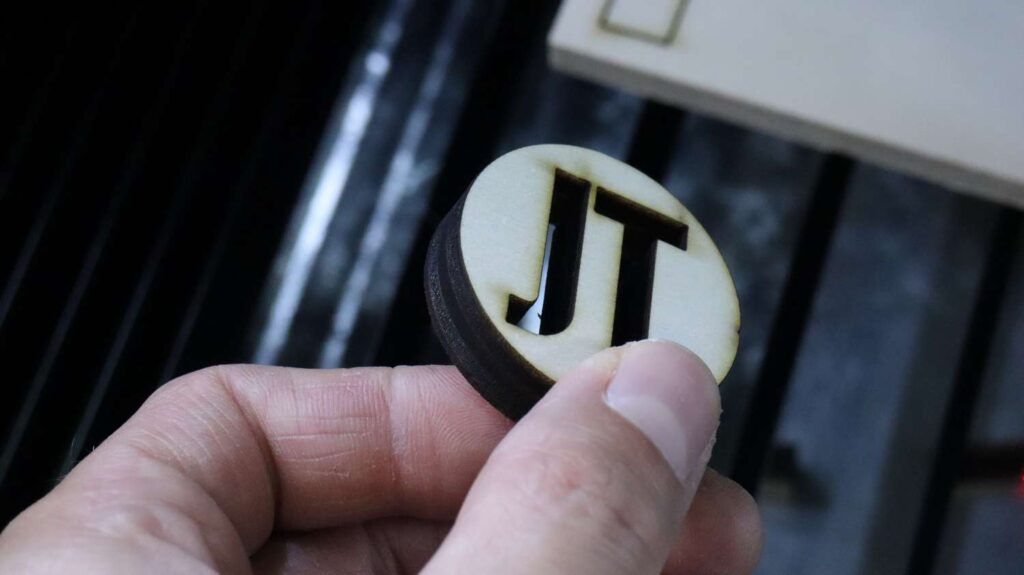
15mm Paulownia Wood: Successfully penetrated in a single pass with moderate edge charring due to the softness and thickness of the grain.
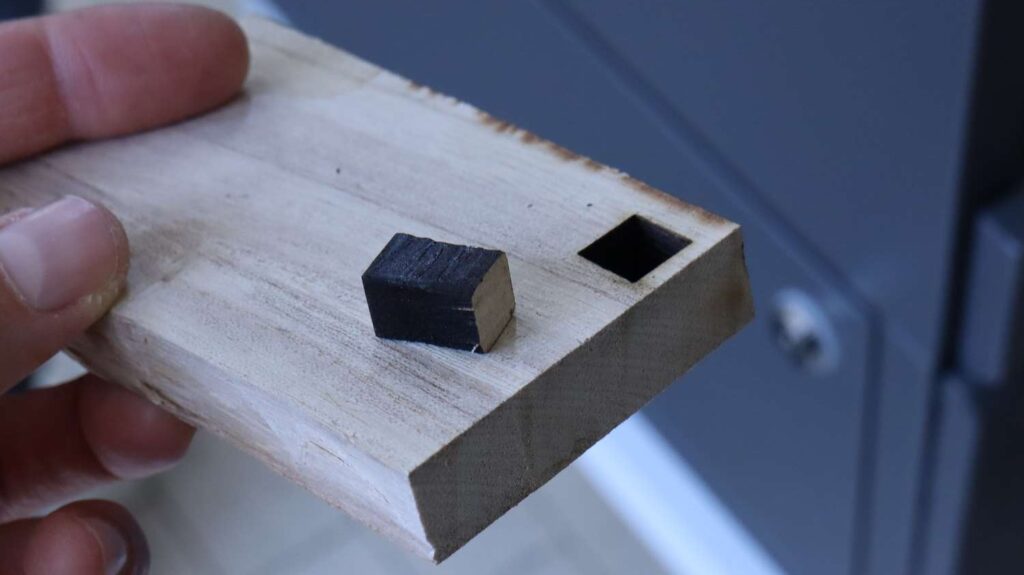
18mm Multi-Layer Plywood: After adjusting feed rate downward, the 80W tube achieved full penetration across the dense adhesive and veneer layers, despite heavy edge oxidation.
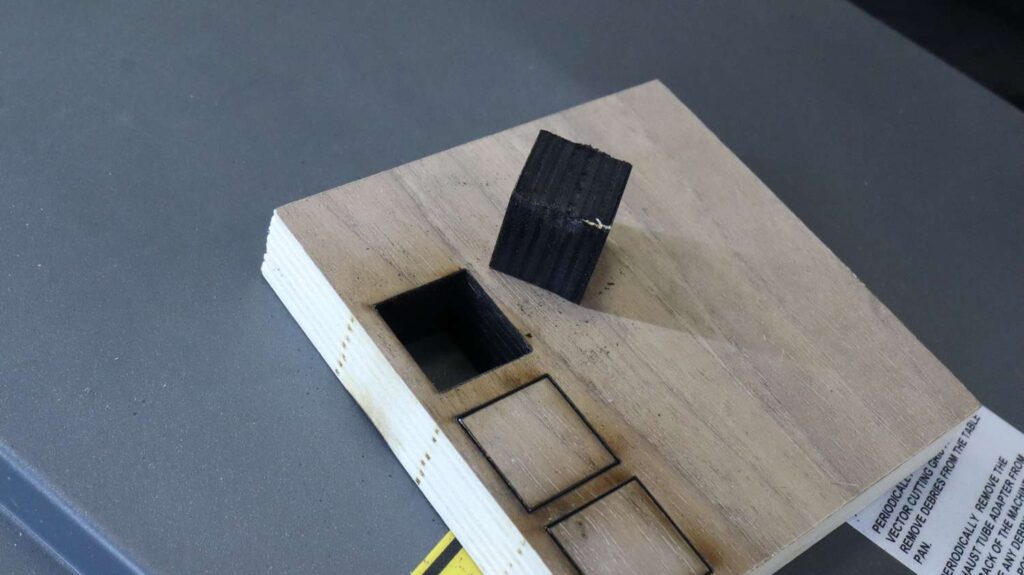
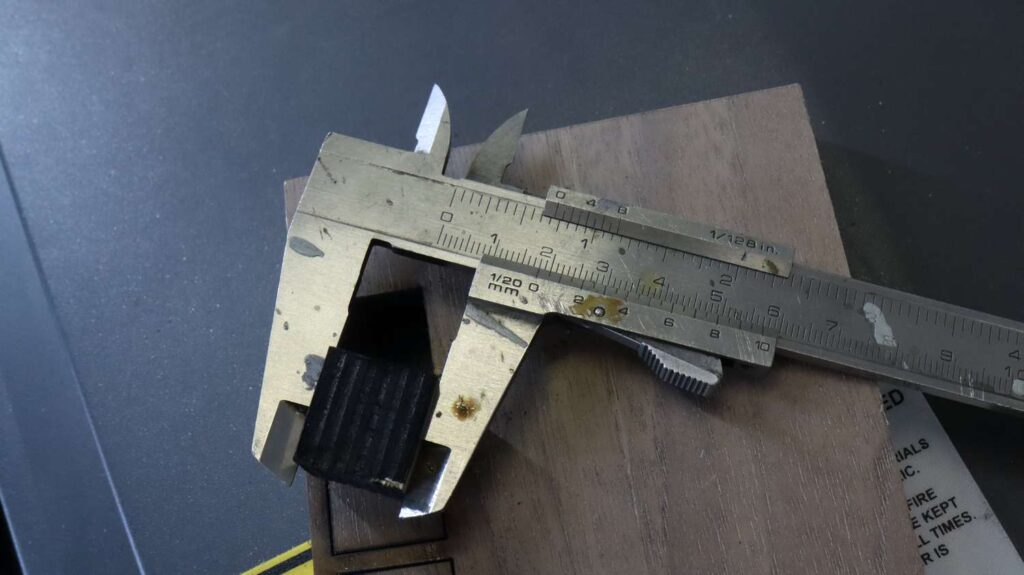
3mm Cast Acrylic: Vaporized cleanly, leaving standard polished edges.
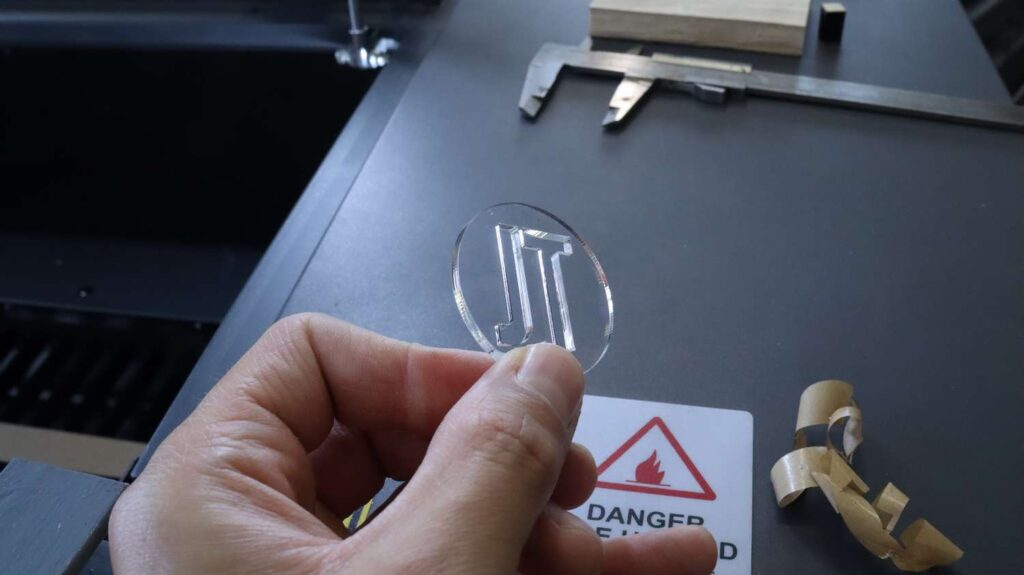
10mm Cast Acrylic: Cut at a steady single-pass feed rate, resulting in a smooth, flame-polished, optical-grade edge profile.
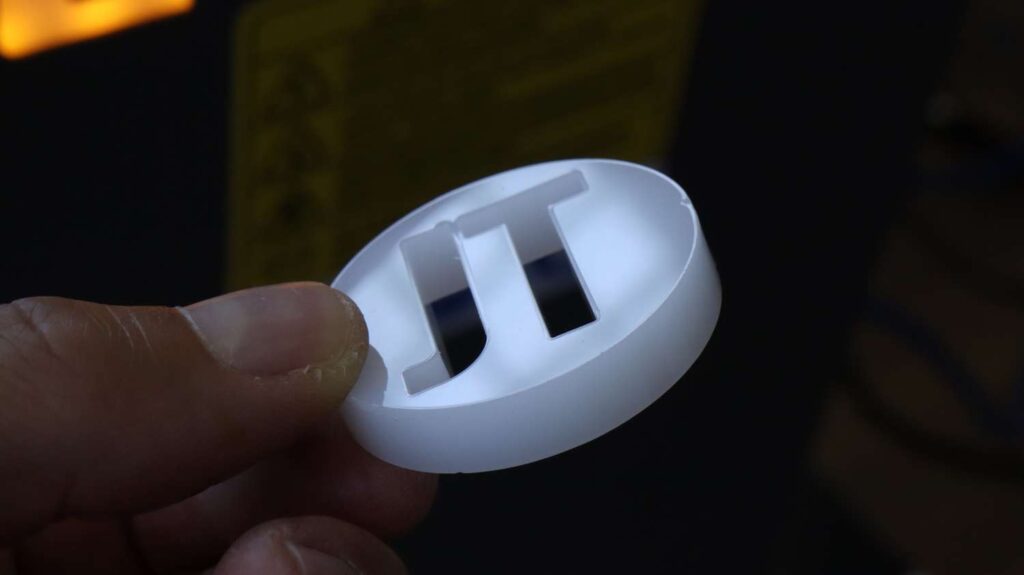
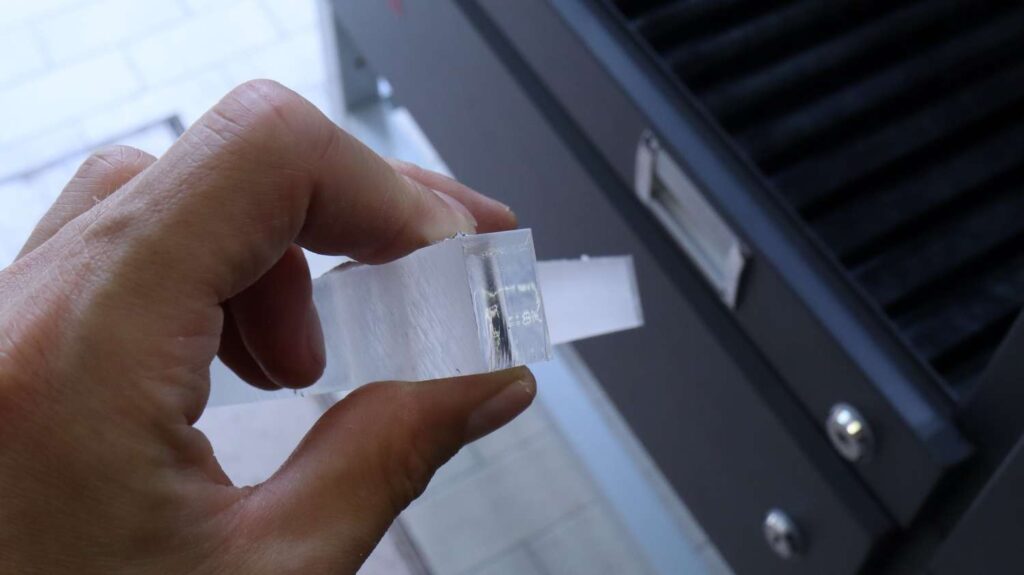
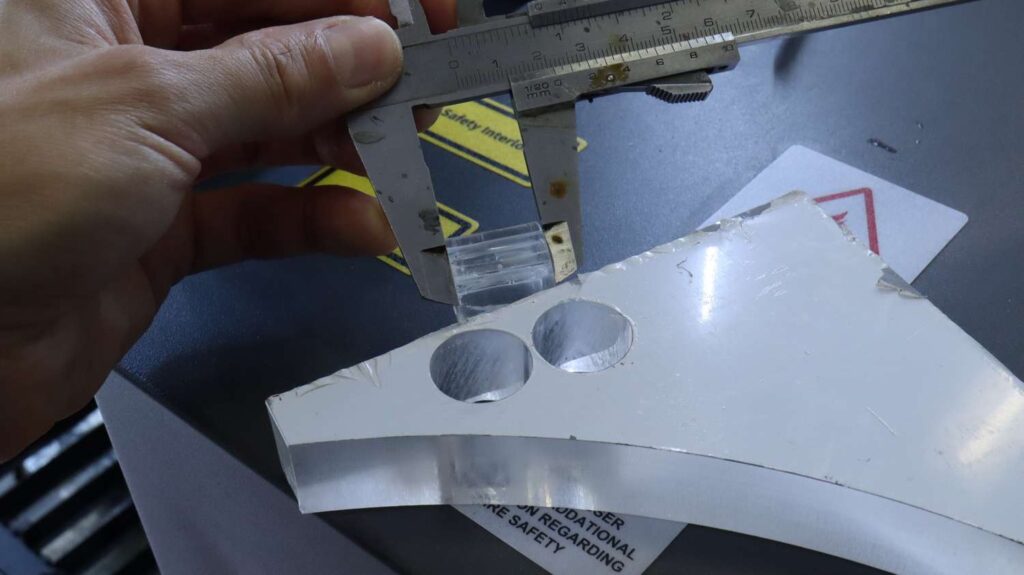
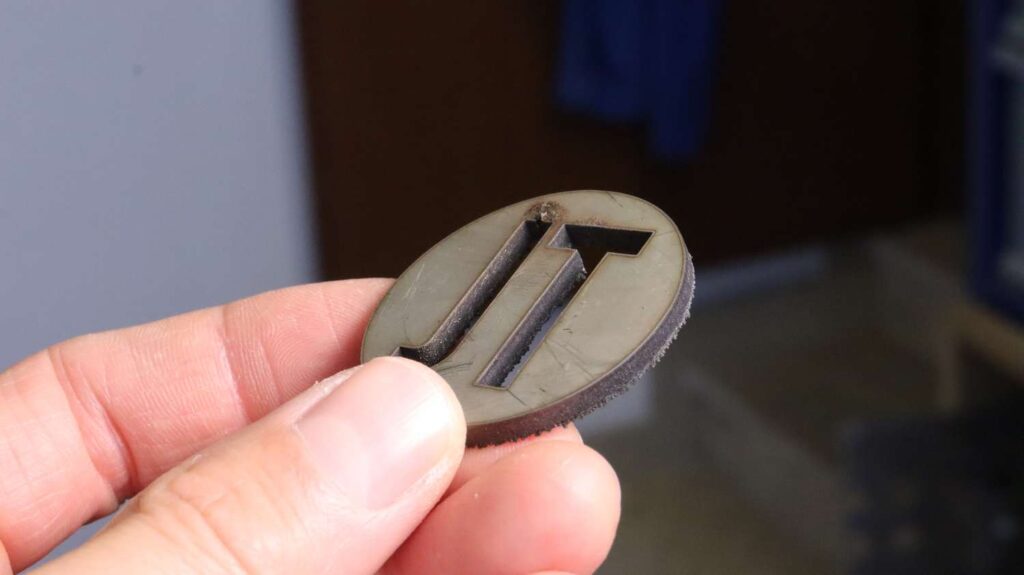
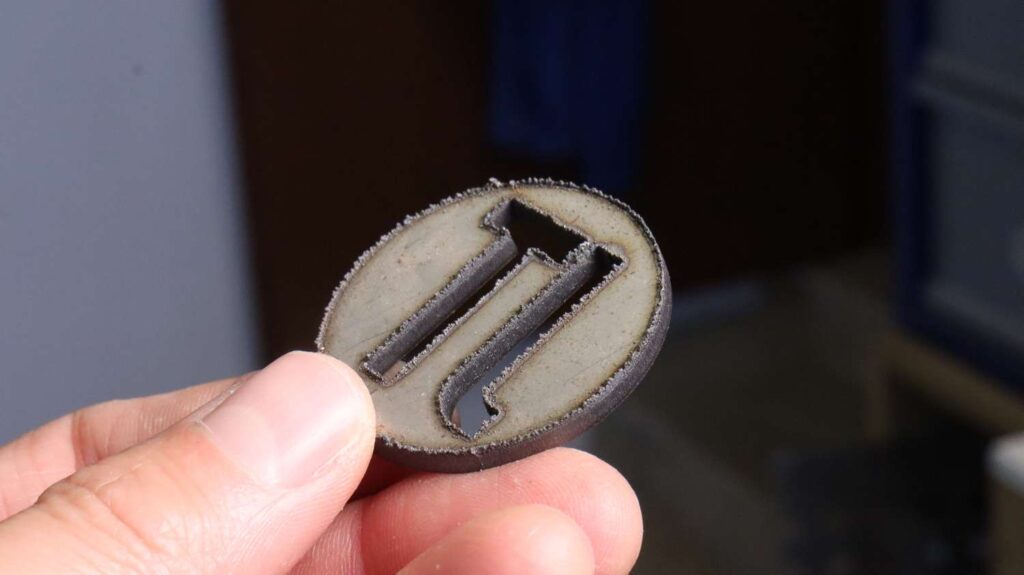
20mm Cast Acrylic: Achieved full penetration on straight cut lines at reduced feed rates. On small, dense vector geometry, localized heat buildup caused fine inner details to fuse, indicating that wide geometry is required when cutting acrylic at this thickness.
400W Fiber Laser Performance: Sheet Metal Benchmarks
Switching back to fiber processing involves retracting the CO2 nozzle and selecting Fiber mode in the control suite.
The system supplies two distinct nozzle profiles: chrome-plated nozzles engineered with internal chambers to optimize low-pressure oxygen flow for carbon steel, and open copper nozzles designed for compressed air or high-pressure nitrogen delivery.
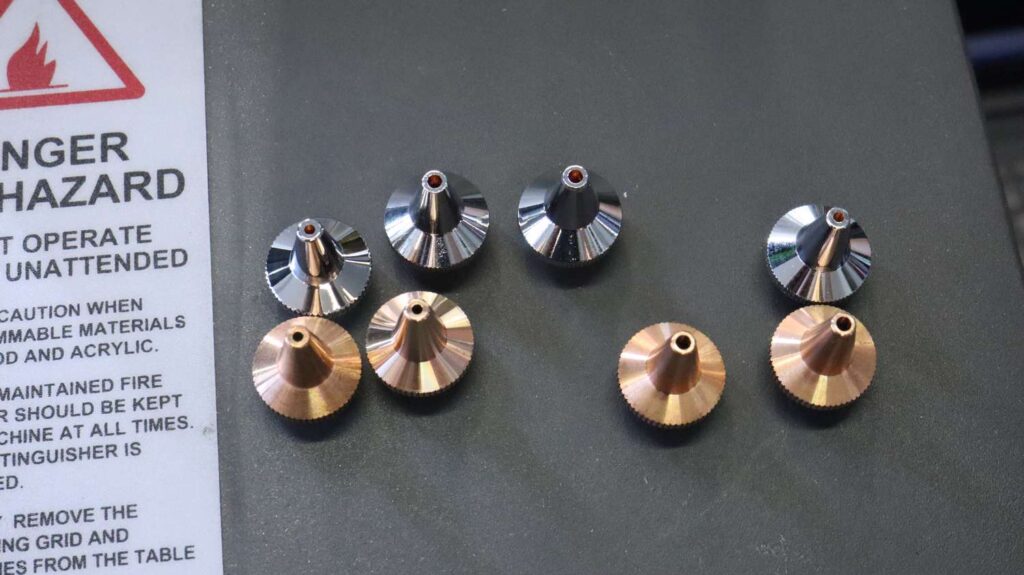
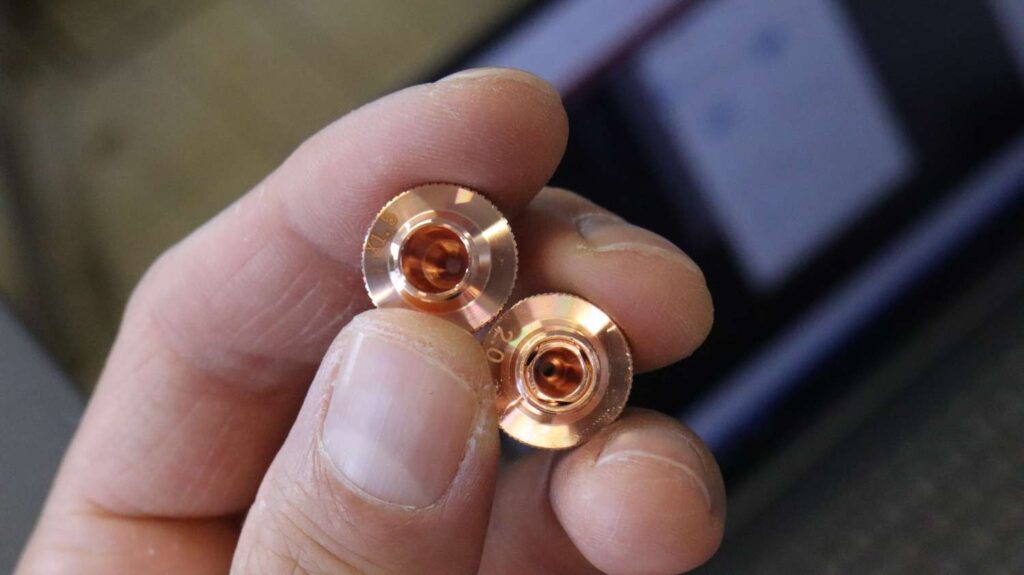
For clean metal cutting, configuring lead-in geometry is critical to ensure initial pierce blowouts occur in scrap material rather than on the finished vector line.
Carbon Steel Tests (Compressed Air Assist)
1mm Carbon Steel: Clean vector markings, zero dross, and minimal heat-affected zones along cut lines.
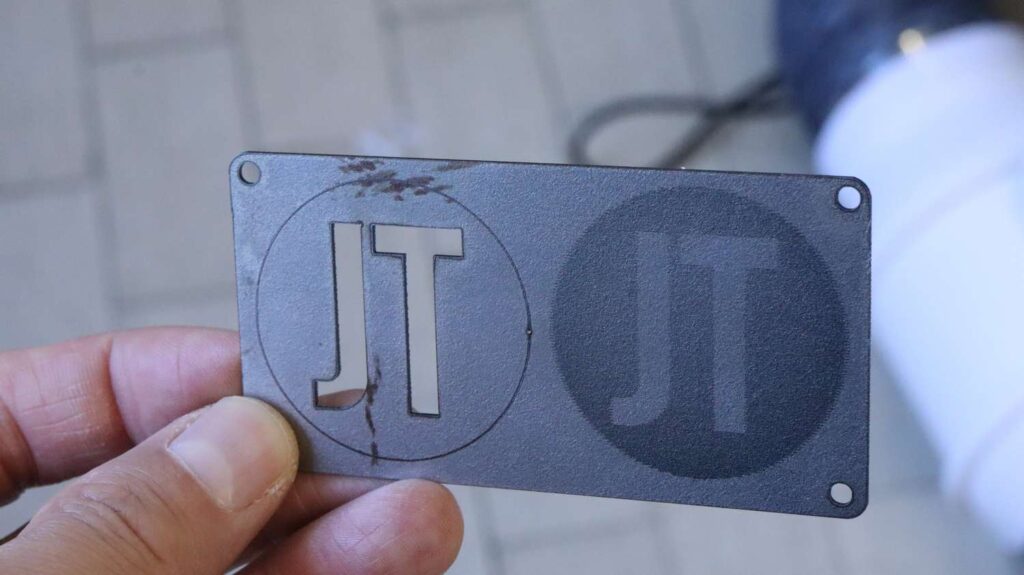
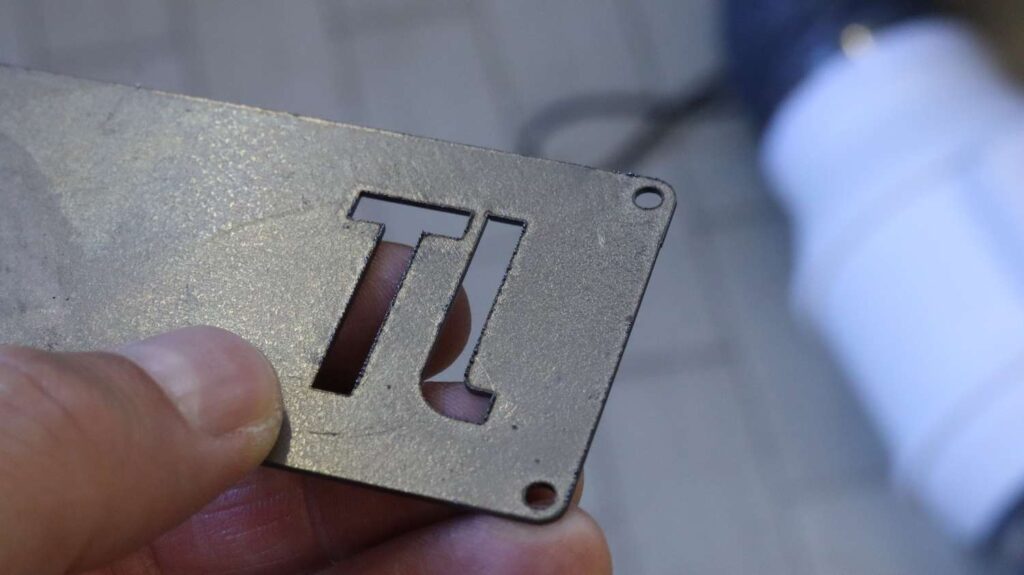
2mm Carbon Steel: Maintained a narrow cutting kerf and clean top surface, with light, easily cleanable slag on the underside.
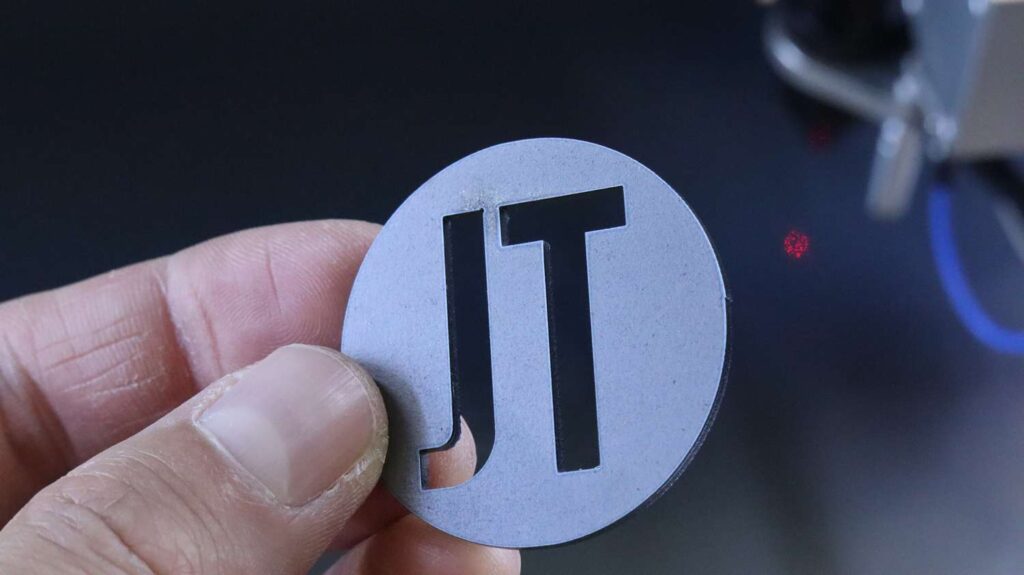
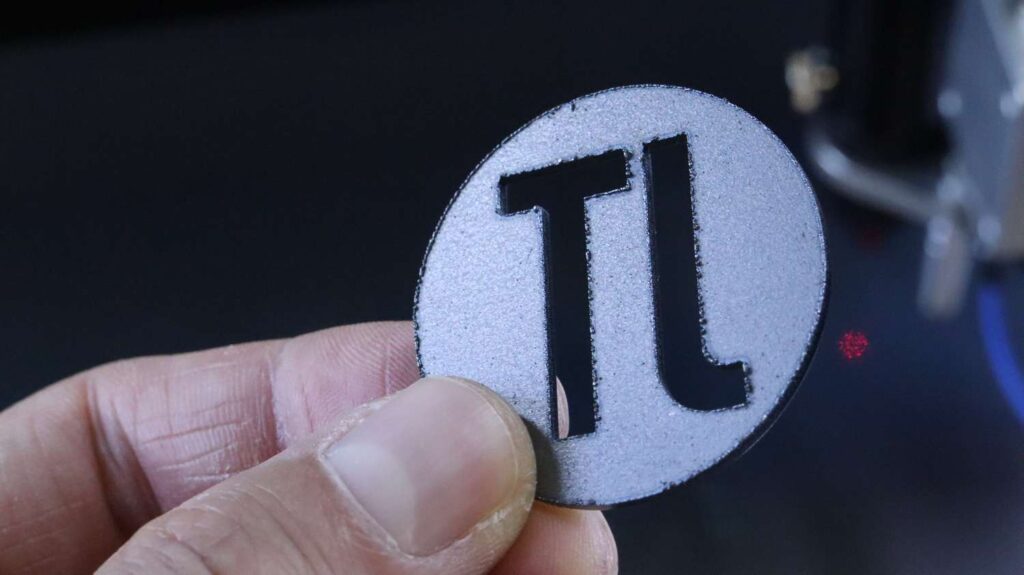
3mm Carbon Steel: Clean top edge definition when using proper lead-ins; noticeable dross accumulation underneath due to the lack of an exothermic oxygen reaction.
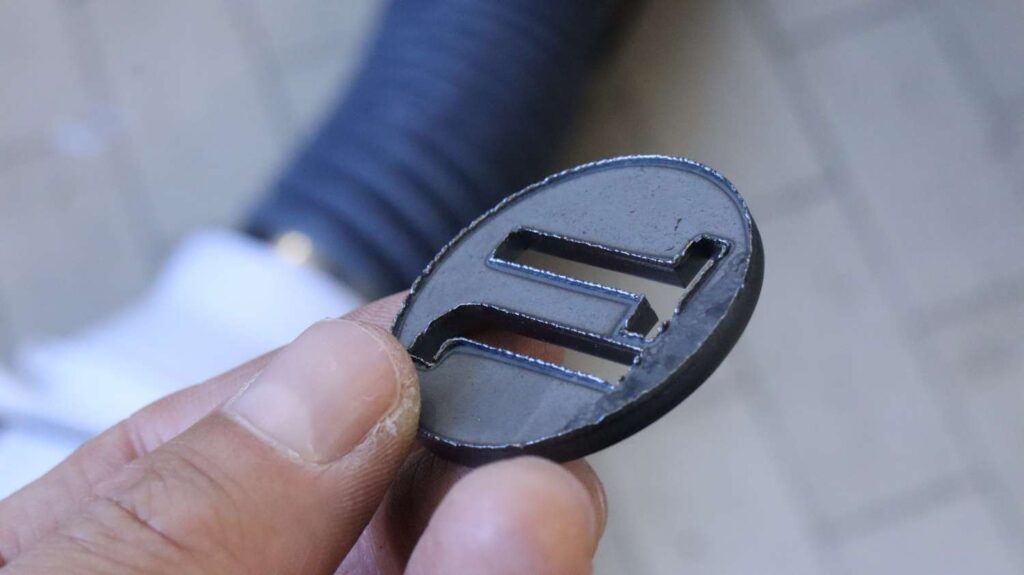
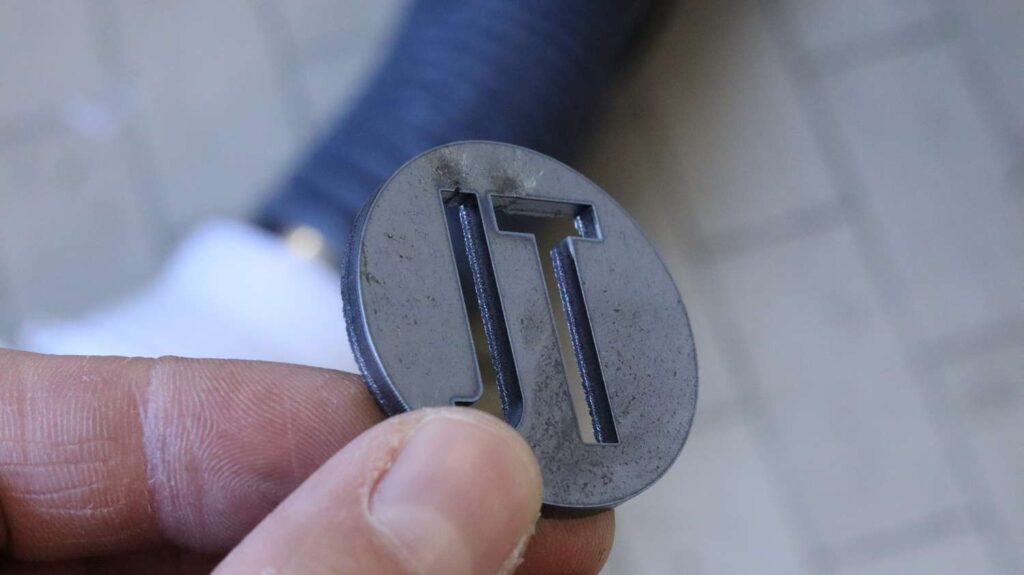
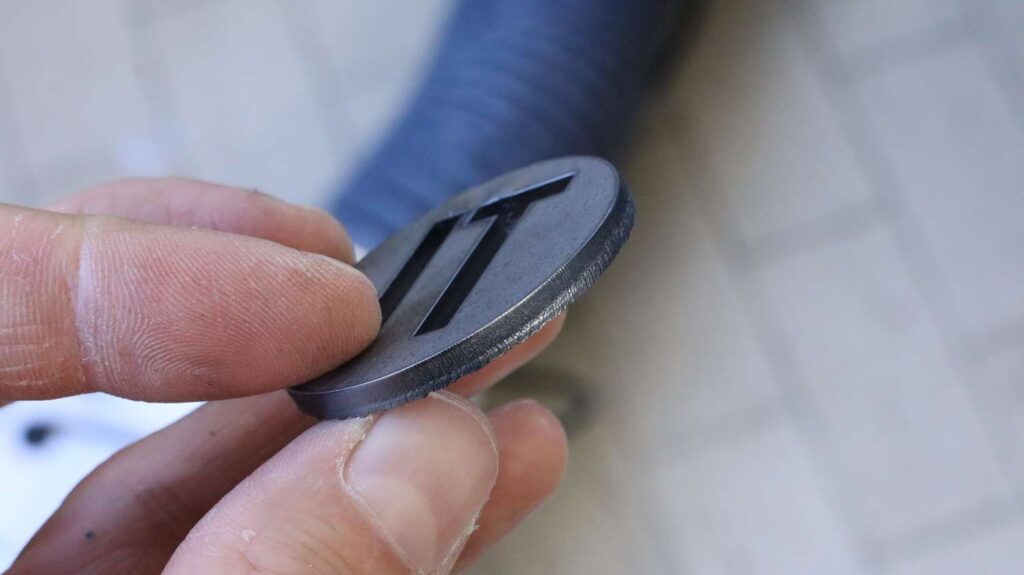
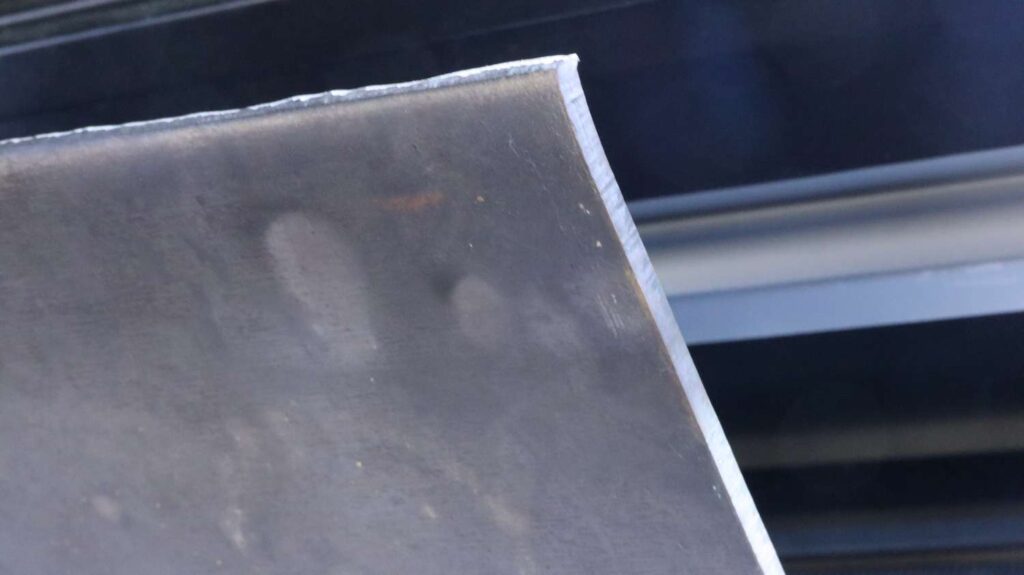
4mm Carbon Steel: Achieved complete penetration by dialing in custom double-stage pierce timing and reduced feed rates, leaving a clean top edge with heavier bottom slag.
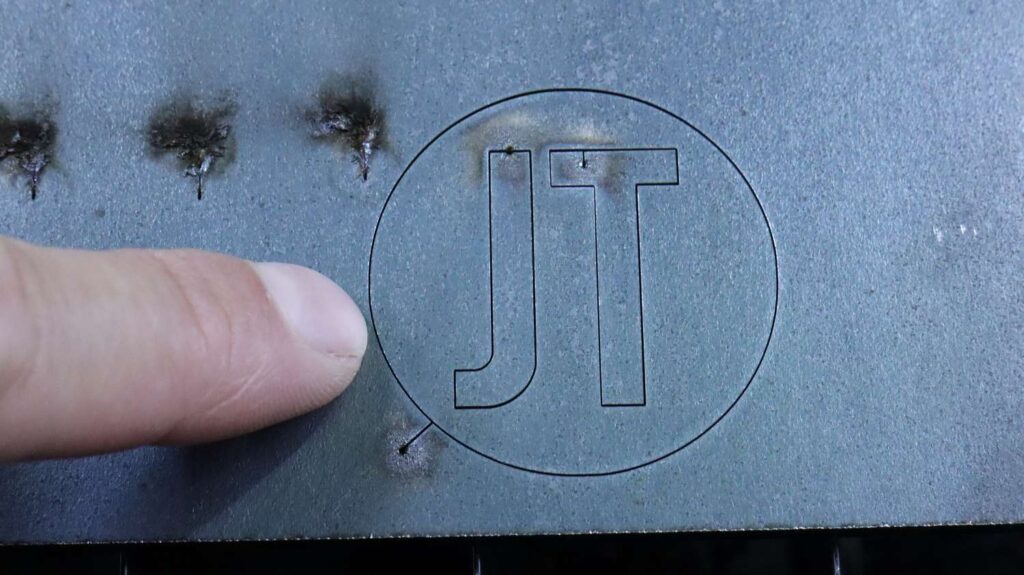
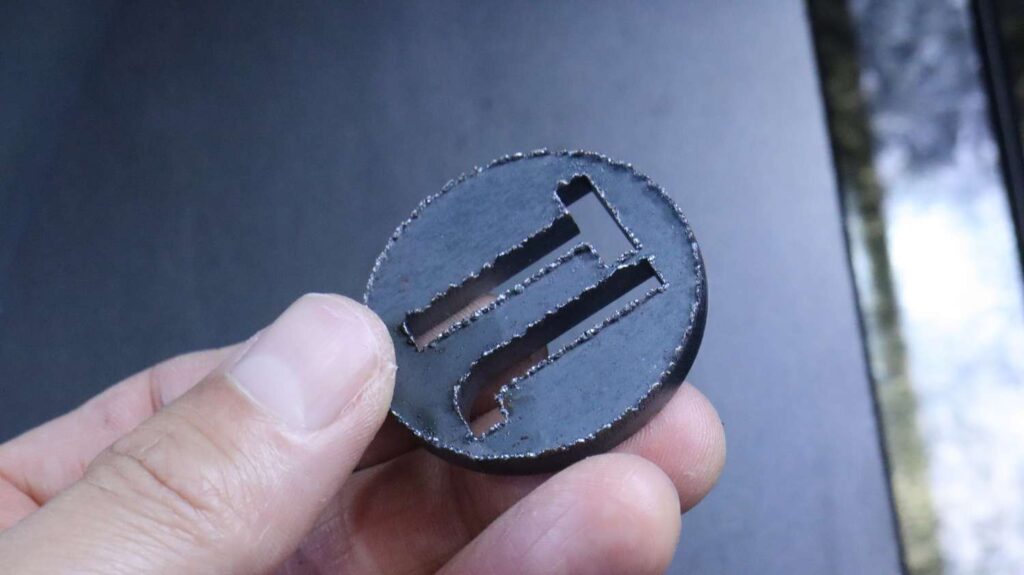
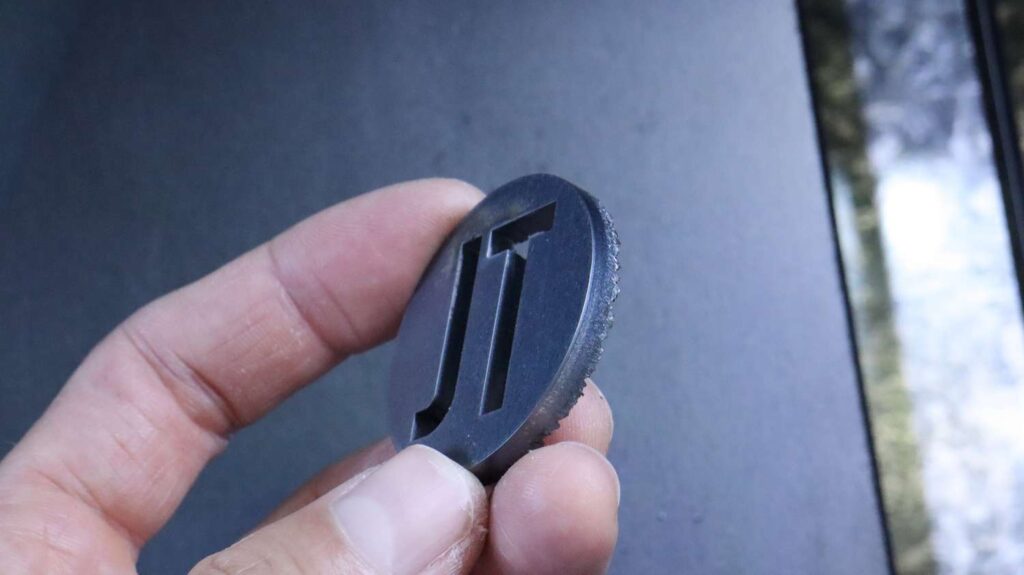
5mm Carbon Steel: 400W with compressed air reached its optical penetration limit; three-stage piercing was unable to punch through without pure oxygen assist.
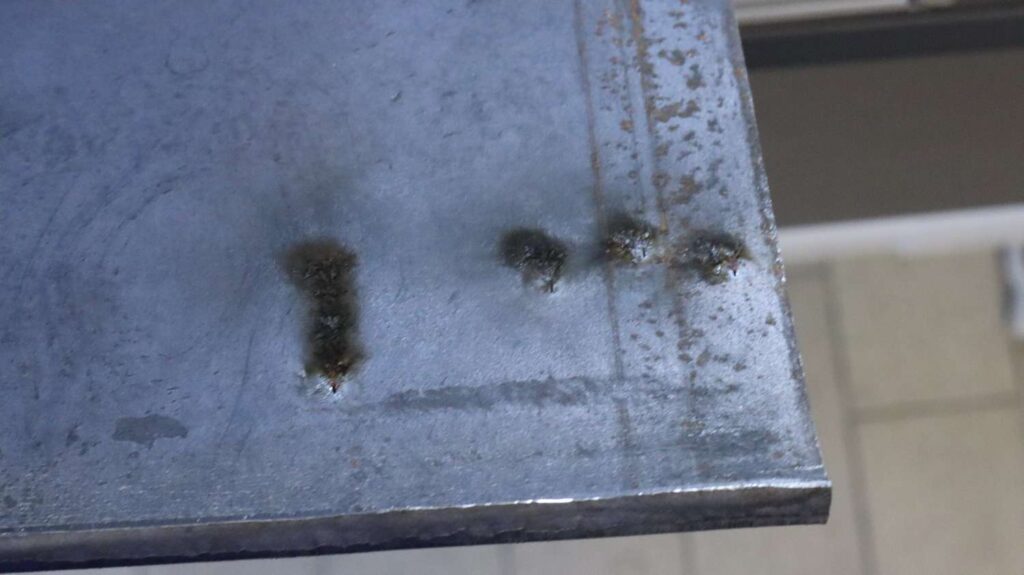
Stainless Steel Tests (Compressed Air Assist)
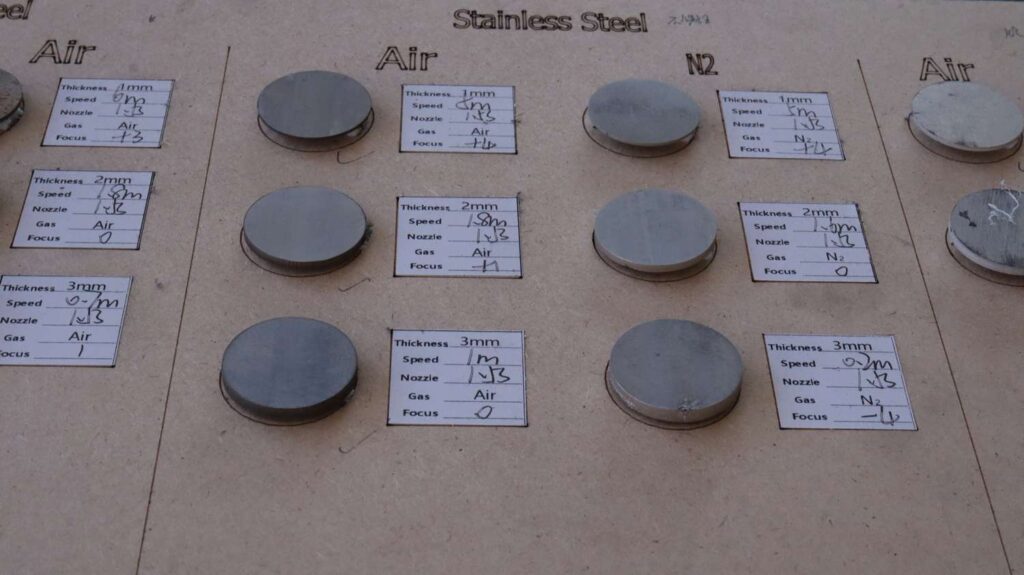
1mm Stainless Steel: Rapid processing speeds with pristine surface finishes. Dynamic power scaling was adjusted via software curves to eliminate localized slag buildup during corner deceleration.
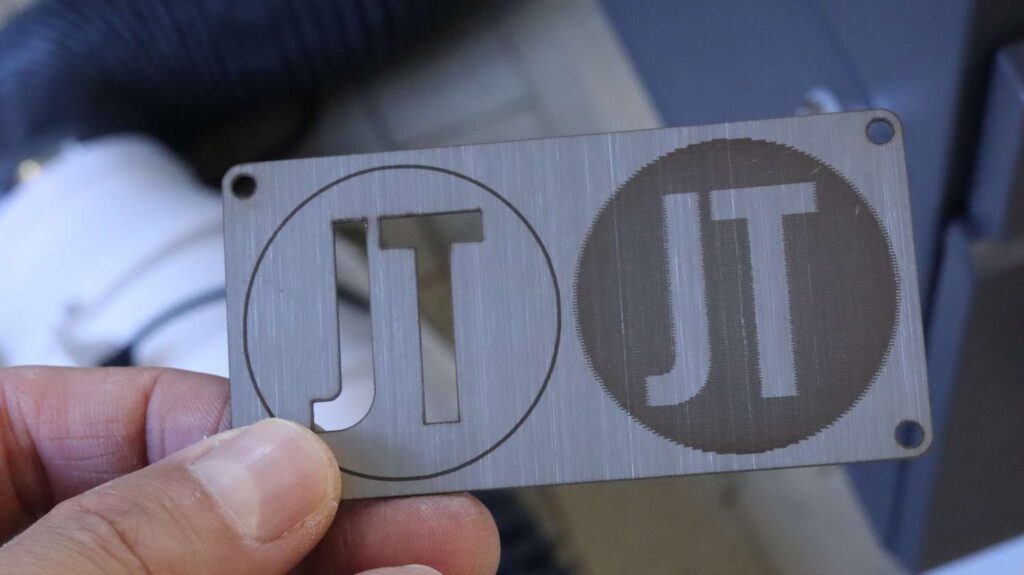
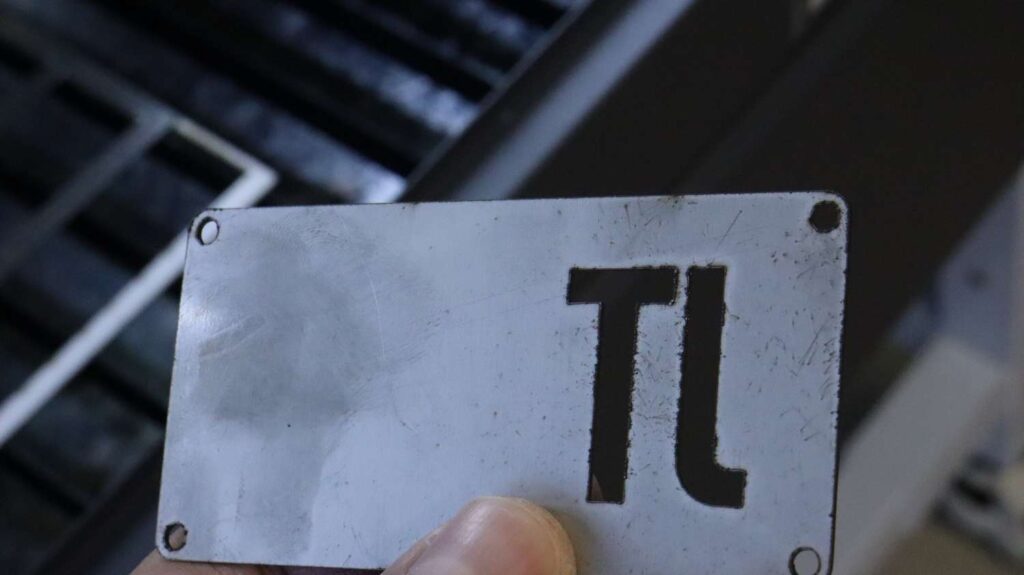
2mm Stainless Steel: Cut complex geometry cleanly with minimal slag, requiring only a brief pass with an abrasive pad for a clean finish.
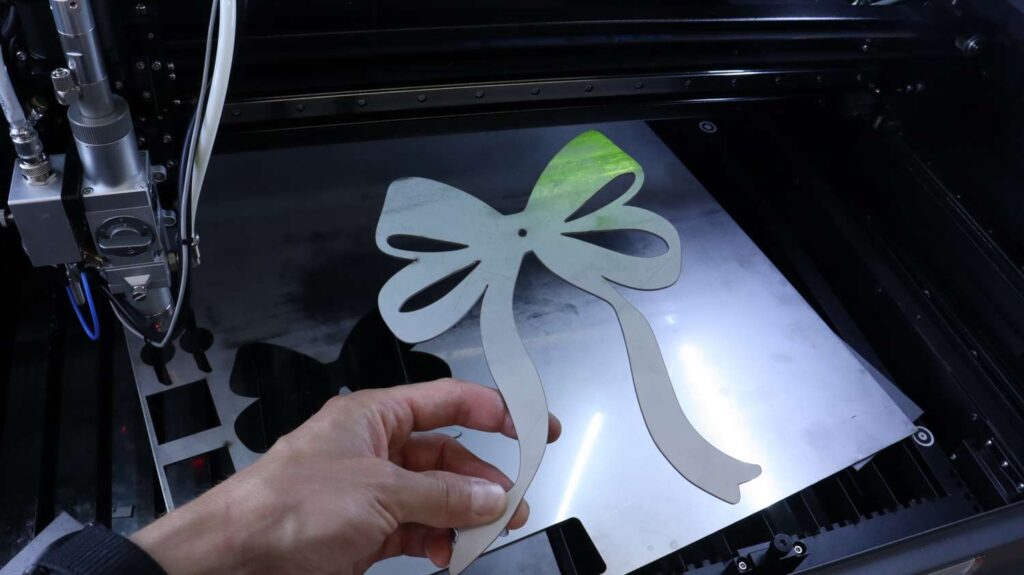
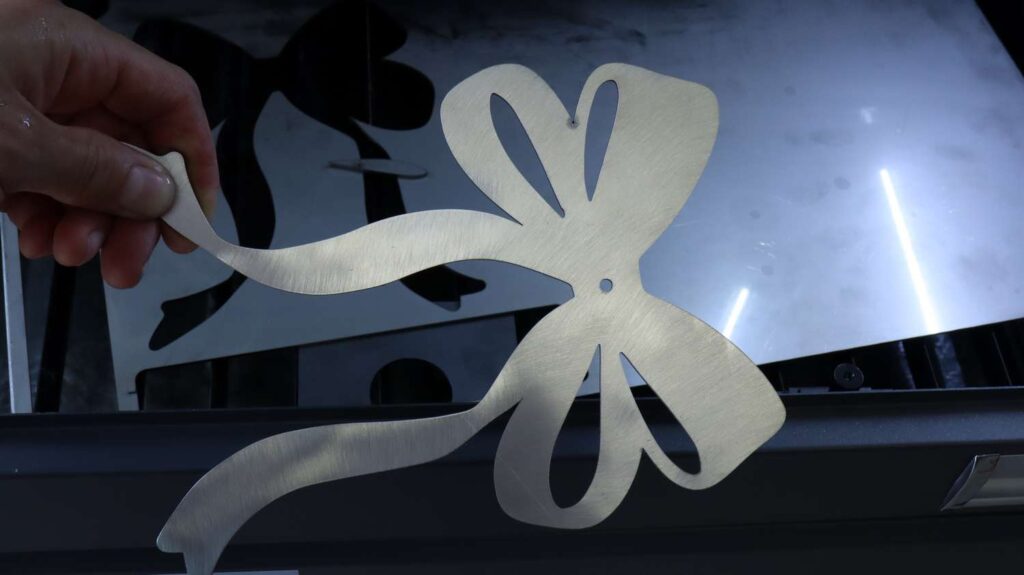
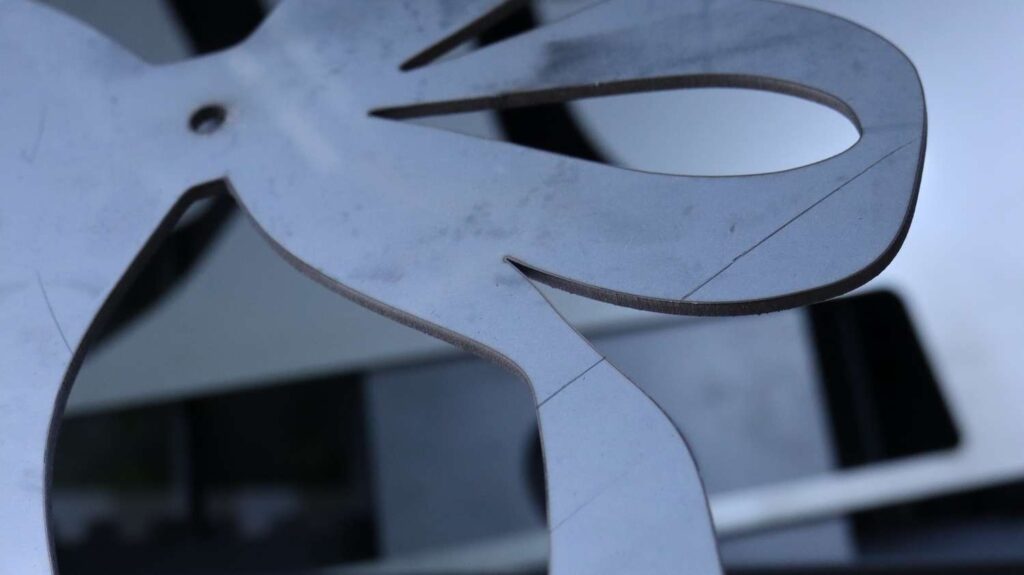
3mm Stainless Steel: Successfully pierced and cut using a three-stage penetration profile, resulting in clean top surfaces and manageable rear dross.
Aluminum Tests (Compressed Air Assist)
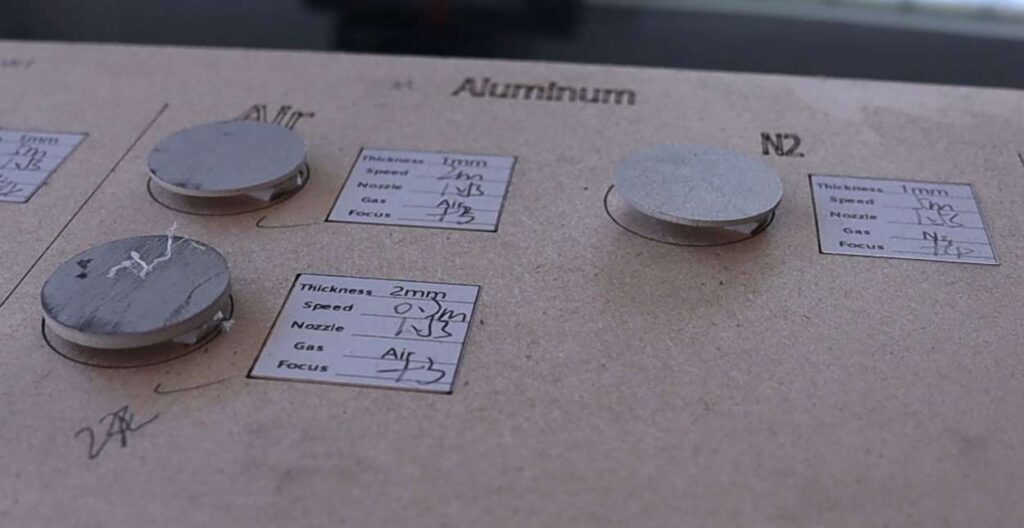
1mm Aluminum: Clean, smooth cut line with minimal bottom slag easily removable by hand. Vector surface marking yielded low visual contrast, typical for raw aluminum on standard 1064nm sources.
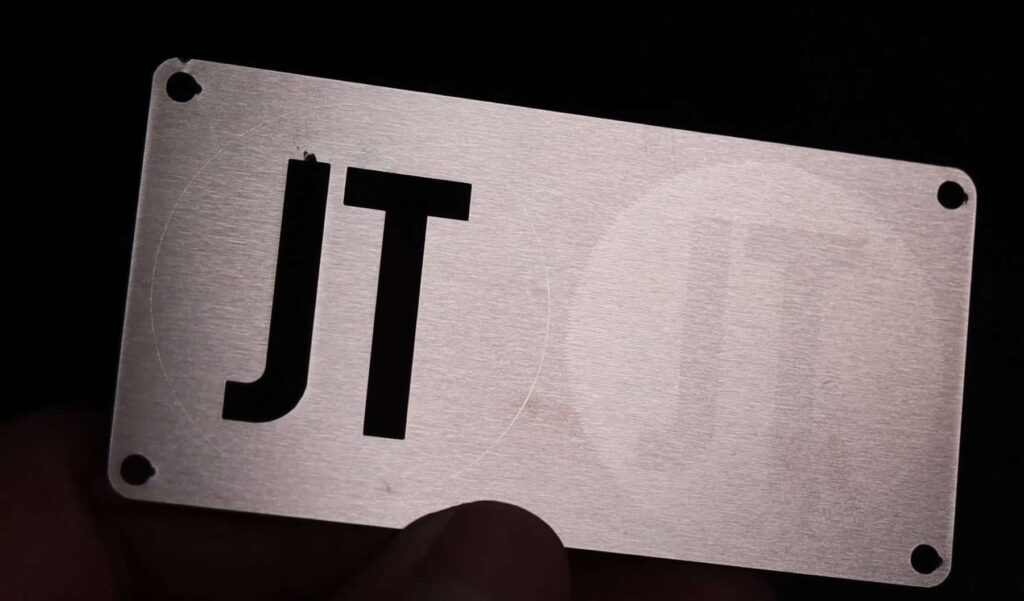
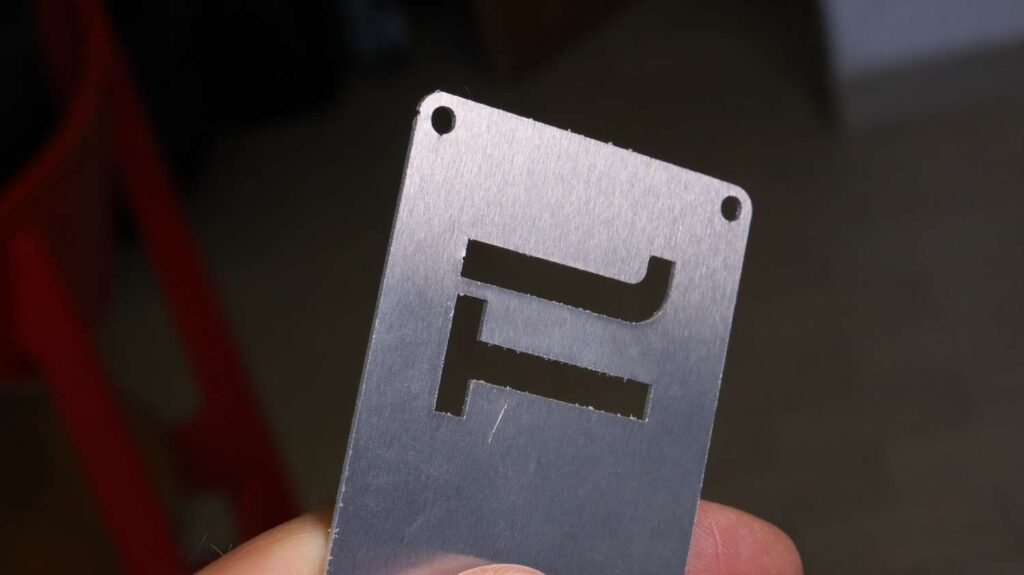
2mm Aluminum: Narrow kerf with consistent edge quality on both faces.
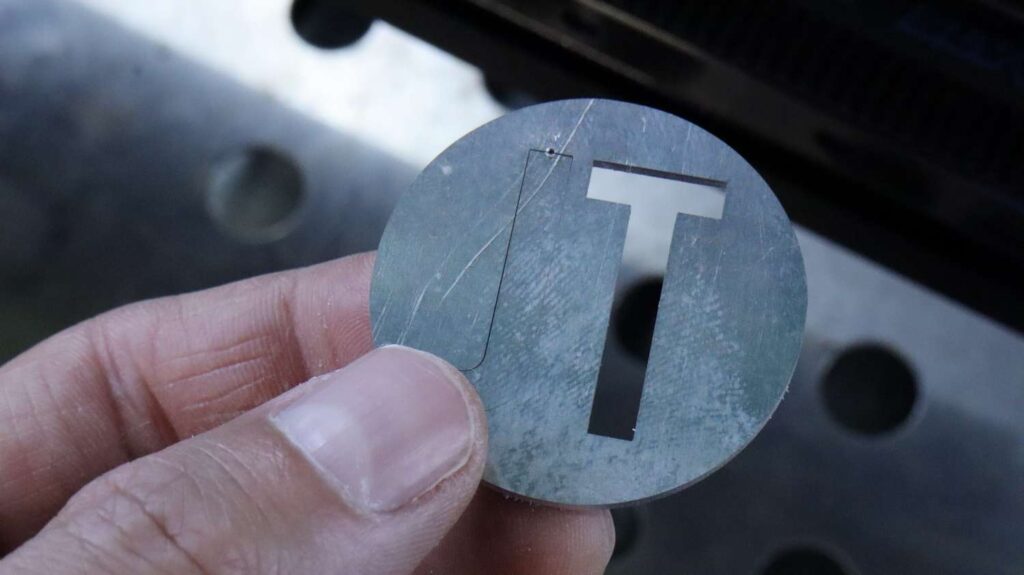
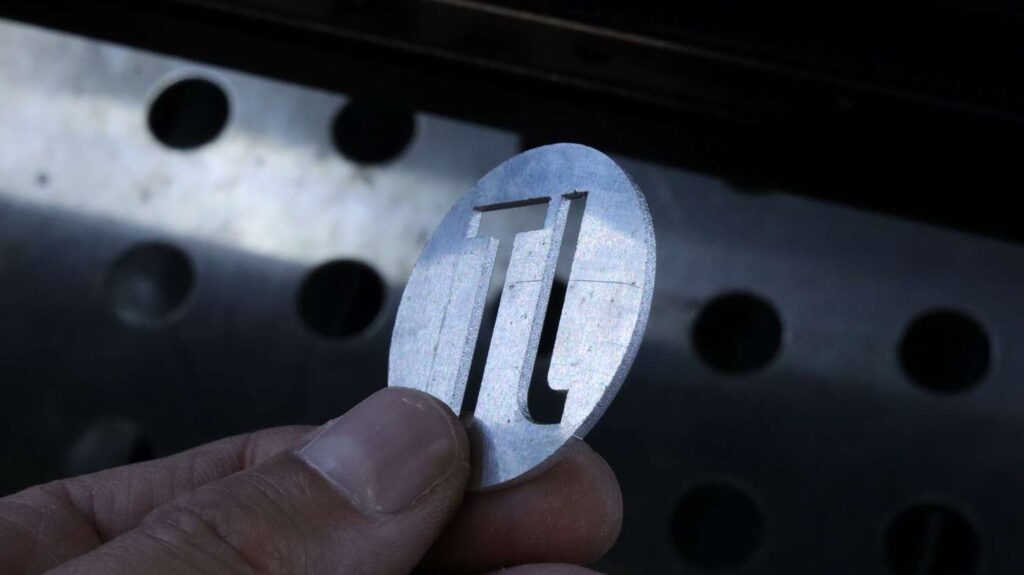
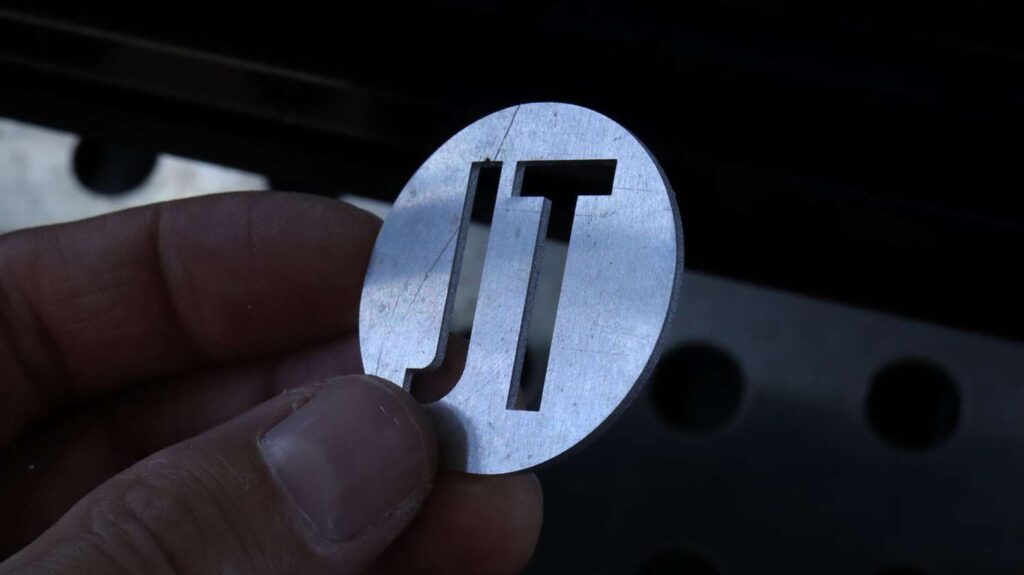
3mm Aluminum: Failed to achieve full penetration. The high thermal conductivity of 3mm aluminum dissipated the 400W beam’s energy faster than the melt pool could clear using compressed air.
Specialized Metal Fabrication & Automation Features
The Gweike MCORE M1 integrates several high-end automated routines typically reserved for larger industrial flatbed cutters:
- Dynamic Capacitive Height Tracking: The cutting head continuously reads capacitance to follow warped, bowed, or bent sheet metal in real time, maintaining consistent focal offset and avoiding head collisions with tipped scrap parts.
- Automated Edge Finding: The capacitive probe touches off multiple points on skewed sheet stock, calculating angular offset and automatically rotating the toolpath in software to eliminate manual workpiece squaring.
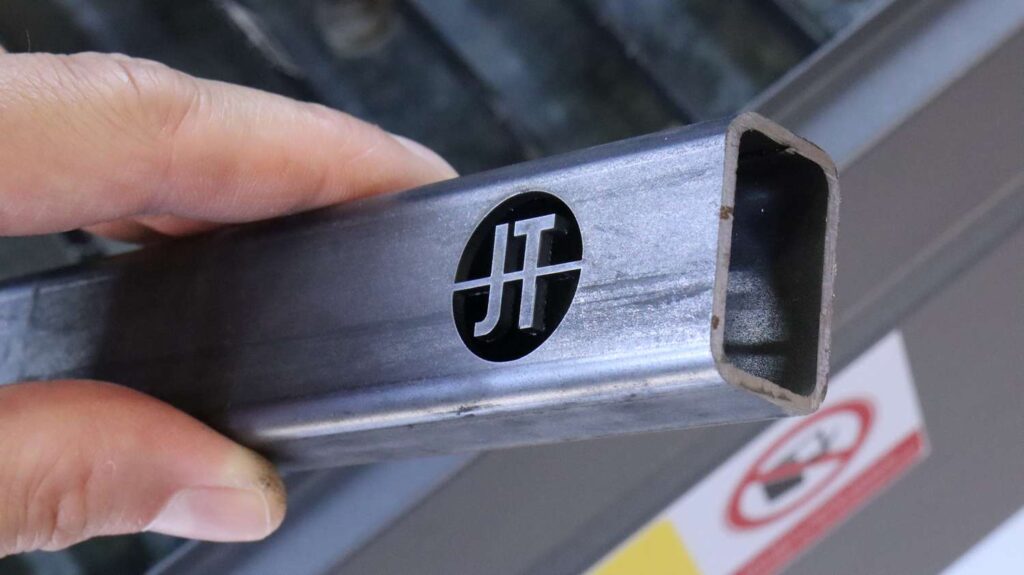
- Tube & Profile Processing: The beam divergence properties allow for top-wall cutting on hollow square structural tubing without burning through the opposing wall. Adding an optional rotary axis expands capability to full 360-degree cylindrical tube profiling.
Assist Gas Comparison: Oxygen & Nitrogen vs. Shop Air
Evaluating cut characteristics across technical gases highlights specific metallurgical differences:
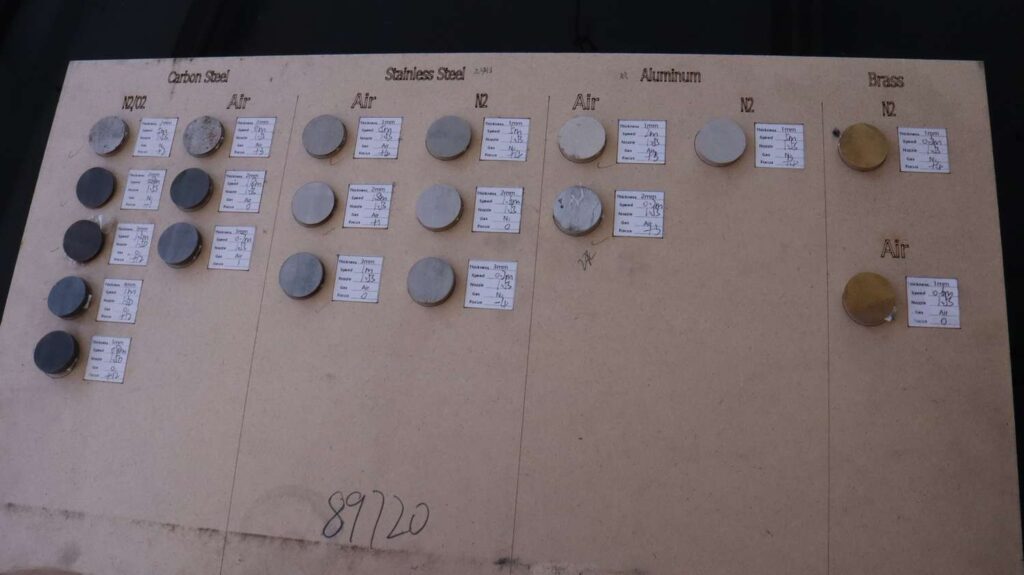
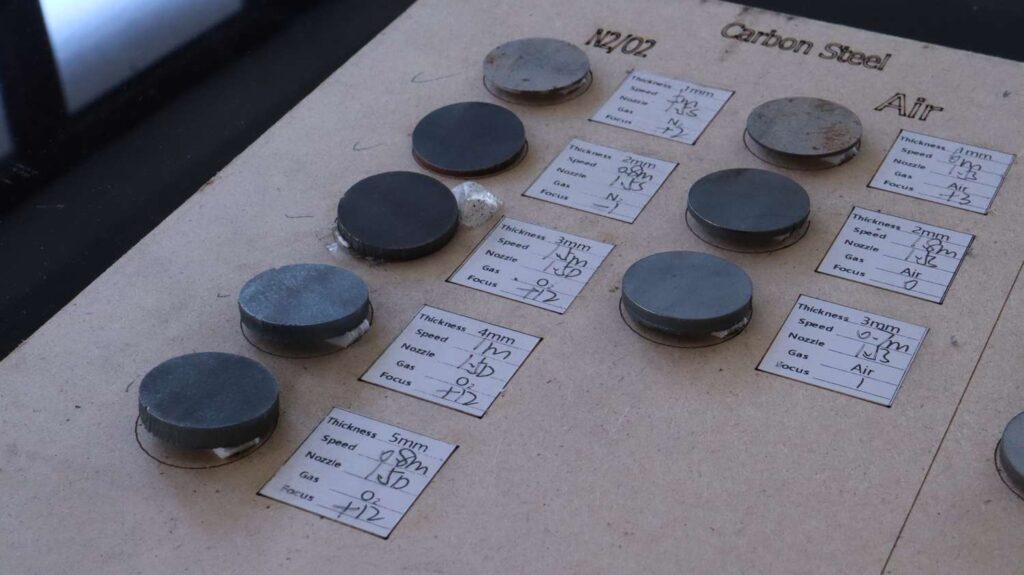
Carbon Steel (Oxygen vs. Air): Oxygen induces an exothermic reaction that allows cutting up to 5mm carbon steel, yielding cleaner dross ejection and faster speeds compared to the 4mm ceiling on compressed air.
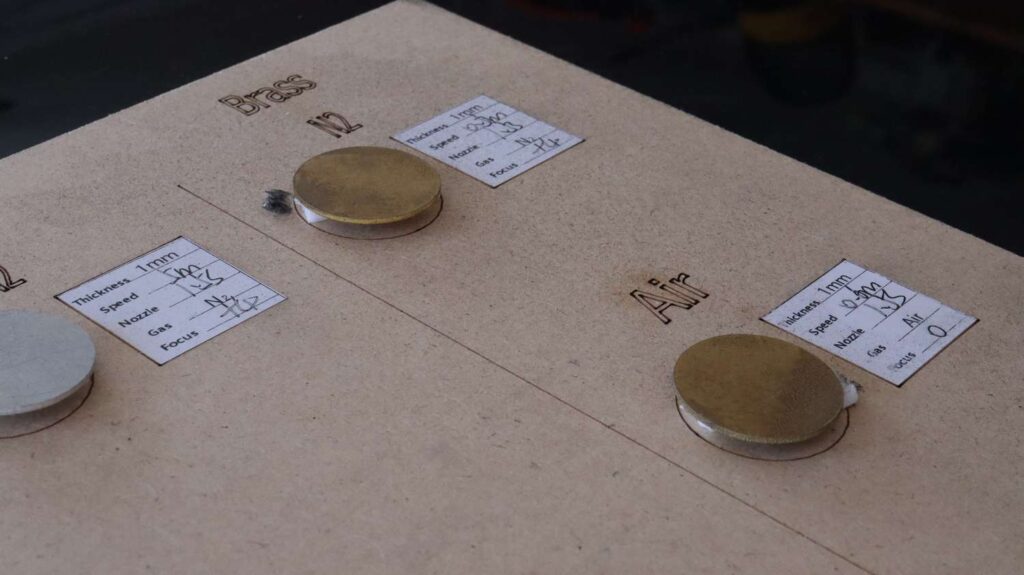
Stainless Steel & Brass (Nitrogen vs. Air): Nitrogen acts as an inert shielding agent, preventing discoloration and producing a bright, burr-free, ready-to-weld edge, whereas compressed air leaves slight oxidation.
Aluminum (Nitrogen vs. Air): While compressed air produces acceptable cuts on thin gauge aluminum, nitrogen prevents oxide formation and produces a brighter edge profile.
It’s the exact same story with brass. Running nitrogen will give you a significantly cleaner, far less oxidized edge.
Conclusion: Is the Gweike MCORE M1 Worth It?
You can get the Gweike MCORE M1 in the US store and in the EU store. As a thank you for reading this article you can use the discount code ‘JTMI’ for 500$/500€ off of MCORE!
And if you want to stay in touch with our latest reviews, subscribe to our mailing list to get notified when we release new review articles!

This post was written by JT Makes It.
JT Makes It is an engineer, hobbyist, and DIY-er armed with a Master’s degree in Electrical Engineering and over a decade of professional experience in the industry. From an early age, JT Makes It was pushed by an insatiable curiosity, spending countless hours disassembling, understanding, improving, and creating various gadgets and products. This lifelong passion led to a broad spectrum of technical expertise ranging from electronics, woodworking, metalworking, and CNC machinery, with a particular focus on laser engravers.
For the past 9 years, he has shared his expertise through engaging videos on his YouTube channel. With the last three years dedicated to scrutinizing and testing laser engravers, he also created this website and emerged as a recognized authority in the field. His expertise extends across the spectrum of laser technologies, ranging from diode lasers, CO2 lasers, and fiber lasers, paying attention to details and providing practical insights.
With JT Makes It, expect a blend of technical expertise, backed with hands-on experience, and a genuine passion for innovation and creation, making him a trusted source in the realm of DIY and laser engraving enthusiasts alike.
*The links on this website can be affiliate links. I earn a small commission at no extra cost to you. When you buy through these links you will support this website, which helps me to run this website(which cost money and a TON of time) and provide all these extensive reviews and information to you for free, without any paid membership.



Leave a Reply